How to Find an Exercise Alternative for the Same Muscle Group
Use a three-column gym swap template to find an exercise alternative for the same muscle group, then keep the change clear in your workout log.
How to Find an Exercise Alternative for the Same Muscle Group
The quickest way to find an exercise alternative for the same muscle group is to write down the original movement, its main muscle group, and the equipment you actually have. Then choose one available exercise that matches the job closely enough, check its instructions, and log the substitute as its own exercise. Do not rename the old movement just to make a workout look tidy.
Use this simple gym swap template:
Original exercise: ____________________
Main muscle group: ____________________
Equipment available today: ____________
Alternative selected: _________________
Why it is a practical swap: ___________
What I logged: sets ___ reps ___ load ___
For example, if your program says cable row but every cable station is busy, you might record a chest-supported dumbbell row instead. Both can be used in a back-focused session, but they are not the same exercise. The point of the template is not to declare them identical. It is to make a sensible, transparent substitution you can recognise next time.
Start with the exercise's job, not its name
An exercise name does not tell you everything about its role in a session. A useful first pass is to note the main muscle group, the movement you planned, and the equipment it needs. That gives you a practical search brief when a bench, cable station, or machine is taken.
For general health, U.S. physical-activity guidance recommends muscle-strengthening work for all major muscle groups on at least two days per week. It does not require one exact barbell, cable, or machine exercise for each job. That is why an equipment-aware alternative can be more useful than abandoning a session, provided the choice is appropriate for you and you can perform it comfortably. Read the Physical Activity Guidelines for Americans for the full guidance.
If an exercise causes pain, or you are changing training around an injury, stop treating a library search as a solution. A qualified clinician or coach who can assess your situation is the right next step.
Use the three-column gym swap template
This is a planning and record-keeping tool, not a prescription for what you should train. Fill it out in under a minute before the first working set.
| 1. Planned job | 2. What is available | 3. What you will record |
|---|---|---|
| Cable row for a back-focused movement | Dumbbells and an adjustable bench | Chest-supported dumbbell row, with its own sets, reps, and load |
| Leg extension for a quad-focused movement | A bodyweight station and a step | Step-up variation, recorded separately from leg extension |
| Machine chest press for a chest-focused movement | Dumbbells and a bench | Dumbbell press variation, recorded as the variation you actually used |
The detail in column three matters. Changing the exercise can change the setup, range of motion, stability demand, and the load you use. Keeping the new name in the log gives future-you an honest comparison instead of a misleading PR or volume total.
How to search for a practical alternative in PeakBFF
PeakBFF's exercise library lets you search and filter more than 220 exercises. Each entry includes a short demo video, poster image, step-by-step instructions, form cues, and the muscles worked. That makes it useful for checking an option in the gym without presenting the app as individual form assessment or a substitute for professional help.
Use this workflow:
- Name the planned movement. Open the library and search for the exercise you expected to do. Note its listed muscles and required equipment.
- Check what the gym has free. Search for an exercise you can set up with the equipment you can access now, then compare the listed muscles with the planned job.
- Read before loading. Watch the short demo and read the instructions and form cues. If the setup is unfamiliar, do not rush it because a machine is available.
- Add and log the real variation. Put the chosen exercise in the workout and log the sets, reps, and load that you actually complete.
- Keep the swap visible. On your next session, compare like with like. Your dumbbell-row history is more useful when it stays distinct from your cable-row history.
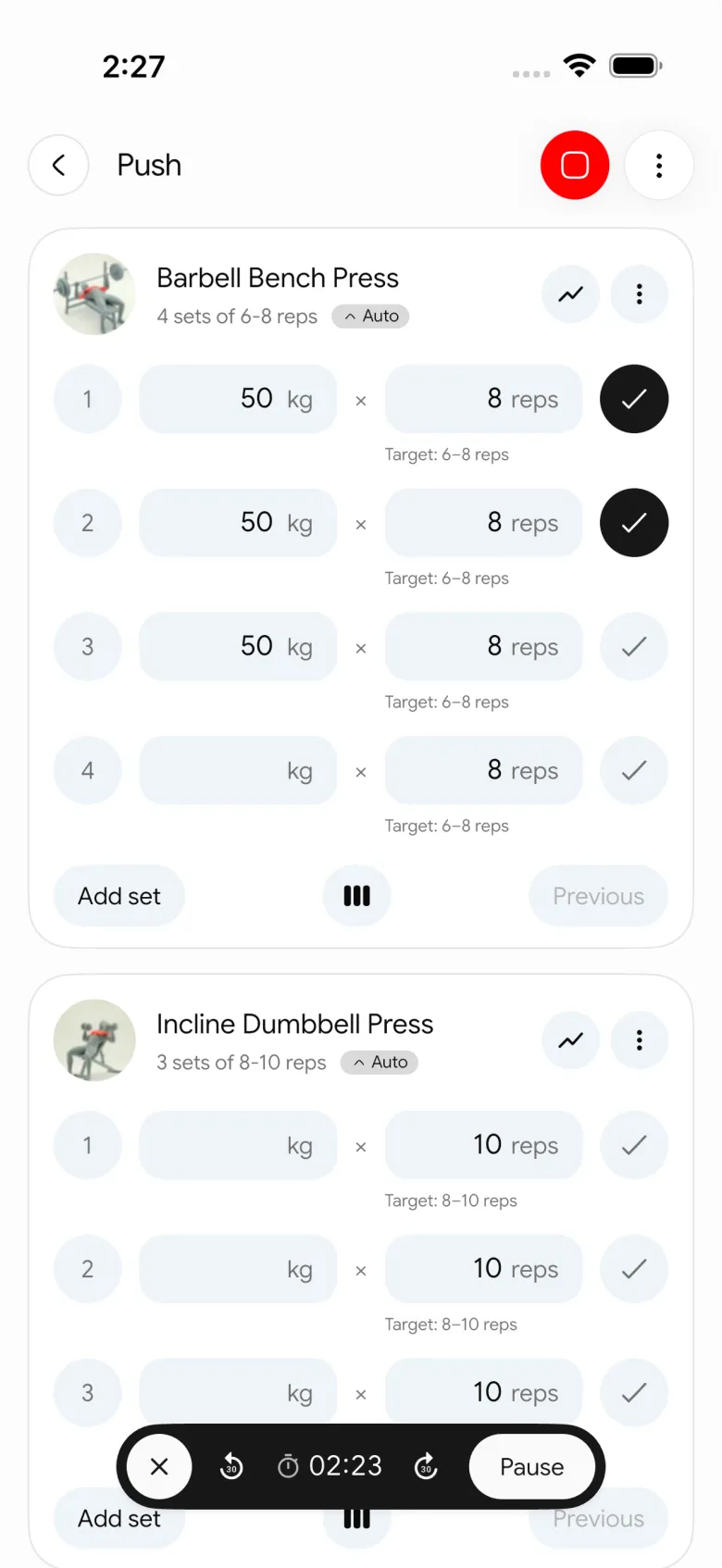
The logging screen is where the decision becomes useful later: record the variation you did, rather than retrofitting the numbers to the exercise you planned.
For the first part of this process, see our guide to checking which muscles an exercise works. If you are building a program from a video rather than swapping one movement, use the YouTube workout plan template to separate the source workout from the version you will repeat.
A worked example: the cable station is busy
Say you planned cable rows in a back-focused workout, but every station is occupied. Rather than waiting indefinitely or calling any pulling movement a cable row, make the swap explicit:
Original exercise: cable row
Main muscle group: back
Equipment available today: dumbbells and incline bench
Alternative selected: chest-supported dumbbell row
Why it is a practical swap: it lets me perform a back-focused pulling movement
What I logged: the dumbbell-row sets, reps, and load I completed
This does not claim that the two movements feel the same or produce identical outcomes. It simply preserves the session's broad purpose while giving the alternative its own usable history. If you want to make the change permanent, review the whole program rather than silently replacing every occurrence.
What not to use this template for
Do not use a same-muscle search to self-manage pain, recover from an injury, or copy a difficult movement you have not learned. A muscle label is only one piece of exercise selection. Your experience, equipment, recovery, goals, and individual constraints matter too.
Also avoid turning the template into a false promise of equivalence. A cable variation, free-weight variation, and machine variation may all have a place in a routine, but their logs should remain separate. The cleanest workout history says what happened.
Keep the alternative and the evidence together
The best substitute is often the one you can identify, set up, and log without guessing. PeakBFF gives you an exercise reference beside your workout record, so a last-minute gym swap does not have to disappear into a vague note.
Download PeakBFF for iPhone or get it on Google Play to browse the exercise library and keep the variation you actually performed in your training history.
More from PeakBFF
More app comparisons, fitness guides, and product notes.
Best Gym App to Find Exercise Alternatives by Muscle Group (2026)
Compare gym apps for finding a practical exercise alternative by muscle group, checking the movement, and keeping the swap clear in your workout log.
How to Create a Fair Gym Leaderboard With Friends: A 2-Week Template
Set up a friendly gym leaderboard with one clear metric, a short review date, and rules that keep the comparison useful rather than personal.
Best App to Log Myo-Reps and Drop Sets (2026)
Compare gym apps for recording linked myo-rep and drop-set follow-ups without losing the sets, reps, and load changes behind them.
How to Share a TikTok Workout to a Gym App: A Simple Review Template
Share a public TikTok workout to a gym app, review the imported draft with a practical checklist, and save only the routine you can actually use.
Best App to Review Weekly Gym, Protein, and Volume Progress (2026)
Compare weekly gym review apps for lifters who want completed workouts, protein, and training volume in one honest end-of-week recap.
How to Use Previous Workout Weights: A Simple Gym Log Template
Use previous workout weights as a reference, not a command. Copy this gym log template, work through an example, and keep your next session clear.