How to Log Post-Workout Protein: A Simple Daily Template
Use this post-workout protein log template to record what you ate, review the day's total, and avoid treating one snack as your whole nutrition plan.
How to Log Post-Workout Protein: A Simple Daily Template
To log post-workout protein, record the food or drink you actually had, its protein amount, and your running daily total. Do not treat one shake or snack as a pass-or-fail test. The useful record is the meal in front of you plus the rest of the day's protein.
Copy this after training:
POST-WORKOUT PROTEIN LOG

WORKOUT FINISHED: ______________________
FOOD OR DRINK: __________________________
PORTION I HAD: __________________________
PROTEIN IN THIS ENTRY: __________________
DAILY PROTEIN SO FAR: ___________________
WHAT CHANGED, IF ANYTHING: ______________
The template works in a notebook, spreadsheet, or nutrition app. It gives you a quick record without inventing a special meal category or assuming that a single food determines your training result.
Why log post-workout protein instead of only a shake?
The post-workout meal is often easy to remember, so it can be a useful anchor for a daily record. But it is still just one eating occasion. The NIH Office of Dietary Supplements notes that adequate dietary protein supplies the amino acids used to make muscle proteins, and its consumer guidance discusses protein across the day, including within two hours after exercise. That is a reason to keep a clear daily record, not a reason to panic if your meal is not immediate.
For healthy adults doing resistance training, a large review found that extra protein beyond a total intake of about 1.6 grams per kilogram per day did not add further fat-free-mass benefit in the studies it analyzed. Individual needs and food choices still vary, so use general figures as context rather than a personal prescription. The practical job here is simpler: know what you had and what your day already contains. The review is available through PubMed.
What should a post-workout protein log include?
Keep five fields. They answer the useful questions without turning a snack into a science project.
| Field | Why it belongs in the log | Example |
|---|---|---|
| Workout finished | Gives the meal context | Tuesday strength session |
| Food or drink | Records what you actually chose | Yogurt, fruit, and toast |
| Portion | Helps distinguish a usual snack from a bigger meal | One bowl and two slices |
| Protein in this entry | Makes the entry comparable with other meals | The amount shown by your food record |
| Daily protein so far | Keeps the focus on the whole day | Breakfast + lunch + this meal |
If the food was packaged, use its current label and serving. If it was a home meal or restaurant order, write the best description you have and note the part that is uncertain. A log can be useful without pretending every estimate is exact.
How do you log post-workout protein?
1. Record the food, not the intention
Write down what you ate or drank after the session, including the portion. "I planned a shake" is not a food log. "One serving of the drink I made" is. If your meal changed because you were hungry, rushed, or sharing food, make that the record instead of forcing it to match a plan.
2. Add the protein amount from the same entry
Use the package label, recipe, food record, or an app's reviewed estimate. Avoid adding a second guessed number in a separate note. One source for the meal makes it easier to compare the entry with the rest of your day later.
3. Look at the running day total
After adding the entry, check the total you have recorded so far. This is the line that stops a post-workout snack from becoming a disconnected ritual. If you have not logged breakfast or lunch yet, add those when you can rather than concluding anything from one meal.
4. Save a repeat only when it really repeats
If you make the same snack often, save a version with the usual ingredients and portion. Recheck it when the brand, recipe, or serving changes. Our repeat meal template for calorie tracking shows a straightforward way to make that shortcut reliable.
Worked example: a post-workout protein log that stays useful
Say you finish an afternoon workout and have a bowl of cottage cheese with peach. You check the product information or your food record before logging it. Your note might be:
POST-WORKOUT PROTEIN LOG

WORKOUT FINISHED: Tuesday, strength session
FOOD OR DRINK: Cottage cheese with peach
PORTION I HAD: One bowl
PROTEIN IN THIS ENTRY: From the product or food record
DAILY PROTEIN SO FAR: Breakfast + lunch + this entry
WHAT CHANGED, IF ANYTHING: Used a different cottage-cheese tub today
Notice what the example does not do. It does not call the meal a required recovery protocol, claim that one amount is right for every person, or turn the entry into a diagnosis. It captures a meal and leaves the daily record clear.
How can you log post-workout protein in PeakBFF?
In PeakBFF, you can start a food entry from a meal photo, a barcode, or a typed description. Review the result and serving before saving it. The nutrition view then shows calories, protein, carbohydrates, and fat against the daily record, so the post-workout entry stays alongside other meals instead of becoming a separate score.
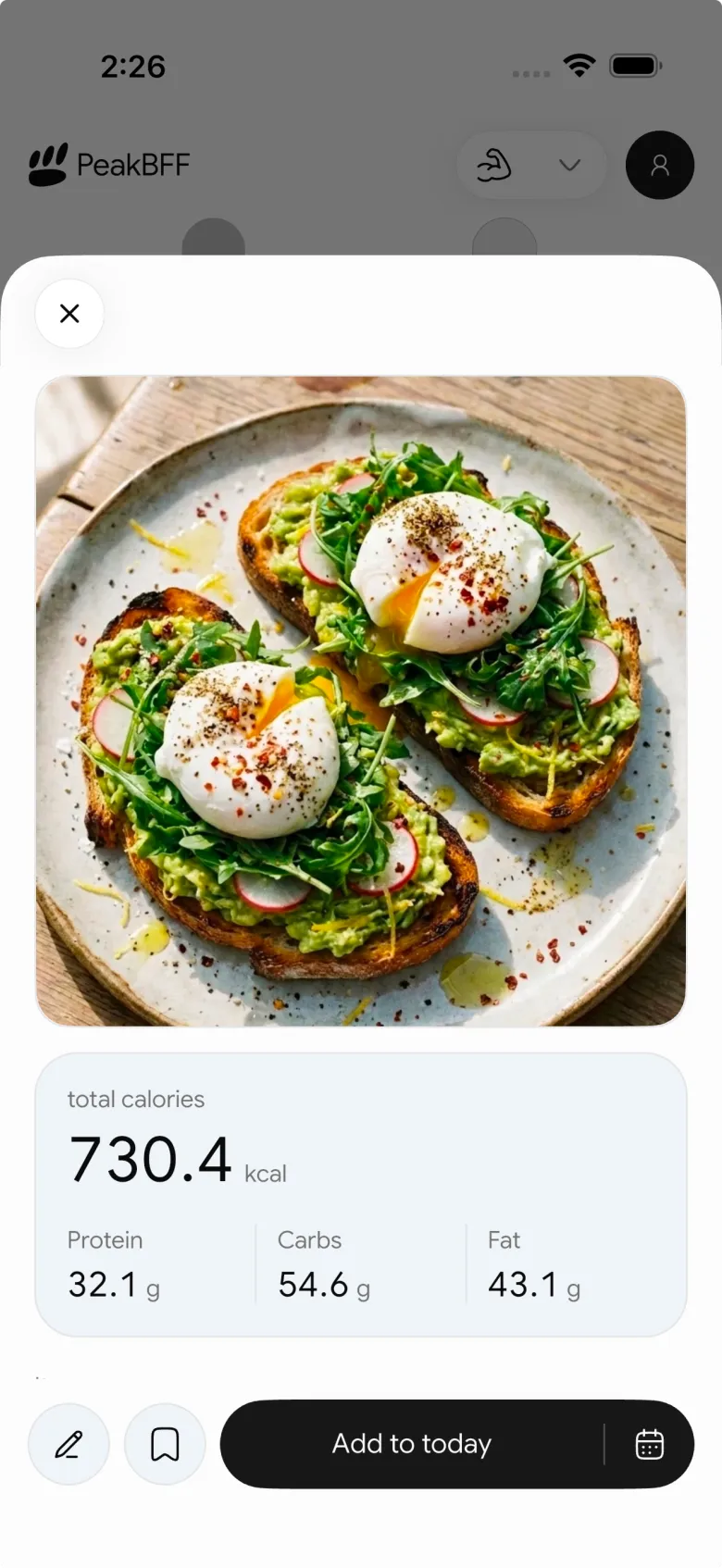
For a snack you make often, you can save the reviewed entry as a meal and re-log it later, while checking that the ingredients and portion still match. PeakBFF does not determine a personal protein requirement or make a food photo exact. It gives you a review-first record of the meal and its displayed macros.
If you are choosing a food logger rather than setting up a workflow, see our best protein trackers with photo food logging comparison. It covers the complementary app-choice question.
When is a post-workout log not enough?
A post-workout entry cannot stand in for a complete food record, nutrition assessment, or individual advice. If you are a teenager, take medication, have a medical condition, or are considering performance supplements, the NIH recommends talking with a qualified healthcare professional about what is appropriate for you. The log is a record-keeping tool, not clinical guidance.
The bottom line
Log post-workout protein by recording the meal, portion, protein amount, and running daily total. Use a repeatable template when it helps, review anything that changed, and keep one snack in the context of your full day.
Download PeakBFF on the App Store or Google Play to keep food entries, protein totals, saved meals, and workout logs in one place.
More from PeakBFF
More app comparisons, fitness guides, and product notes.
Fitbod vs Hevy (2026): Generated Workouts or a Simple Log?
Fitbod vs Hevy compared on price, workout generation, free limits, watch apps and nutrition, plus where PeakBFF fits if you want training and food in one app.
How to Log Raw vs Cooked Food Weight: A Simple Conversion Cheat Sheet
Weigh food raw or cooked, then log it against a matching entry. A cheat sheet with USDA numbers for chicken, rice and pasta, plus a worked example.
MacroFactor Workouts vs Hevy (2026): Which Fits Lifters Who Track Food?
MacroFactor Workouts vs Hevy compared on price, progression, free limits and nutrition, plus PeakBFF as a one-app option for lifting and food logging.
Best AI Physique Transformation App With Workout Tracking (2026)
Compare AI physique-transformation preview apps for motivation, photo boundaries, and the workout record you use after the preview.
How to Save a Workout as a Template After Training
Turn a session that worked into a reusable workout template without confusing completed results with your next plan.
Best Beginner Gym App With Starter Programs and Form Cues (2026)
Compare beginner gym apps for choosing a starter program, checking exercise form cues, and logging the sets you actually complete.