Best App to Review Weekly Gym, Protein, and Volume Progress (2026)
Compare weekly gym review apps for lifters who want completed workouts, protein, and training volume in one honest end-of-week recap.
Best App to Review Weekly Gym, Protein, and Volume Progress (2026)
If you want a weekly review that starts with completed workouts and can also include the protein and nutrition records you chose to log, PeakBFF is the best app for reviewing weekly gym, protein, and volume progress. Its weekly recap can bring together training signals such as workouts, completed sets, volume, a top lift, and a best workout with recorded nutrition context. It also turns the recap into an image you can keep or share from your phone.
Short answer: choose PeakBFF when your Sunday question is not only "what did I lift?" but also "what did the wider week look like?" Trainwise IQ is a credible focused choice for coach-style strength reviews. Strong & Fit is a good fit when trainer collaboration, weekly check-ins, and measurements are the central workflow. Badger is worth considering for a highly detailed training-only view of weekly volume by muscle group.
No weekly recap can explain why a session felt difficult, assess recovery, or replace individual coaching or medical advice. It is a clearer view of the records you made, not a verdict on your progress.
The three options, compared
| What matters | PeakBFF | Trainwise IQ | Strong & Fit | Badger |
|---|---|---|---|---|
| Weekly review | Live current-week view plus completed-week history | Weekly, monthly, and 28-day strength reviews | Weekly volume, charts, and weekly check-ins | Current training-window volume and muscle balance |
| Gym signals | Workouts, sets, volume, top lift, best workout, and muscle-set context when present | Logged sets, reps, weight, volume, and estimated strength trends | Completed workouts, weekly volume, personal records, and muscle balance | Weekly sets per muscle group, activity, and exercise analytics |
| Protein and nutrition context beside training | Yes, when you log it | Not stated on its public review page | Nutrition is not the listed focus | Not the listed focus |
| Share a weekly recap image | Yes, through the system share sheet | Not stated on its public site | Not stated on its public site | Not stated on its public site |
| Best for | One connected gym and nutrition review | Training-only strength analysis | Trainer-led check-ins and measurements | Detailed volume by muscle group |
1. PeakBFF: best for one weekly record
PeakBFF works best when you do not want to reconstruct the week from separate workout, food, and notes apps. A live recap can show the current week so far. Completed weeks are available as recaps in history. The recap is composed from what you logged, so it can surface workouts, sets, volume, a top exercise, and a best workout. When the relevant records exist, it can also include weight, average calories, protein, water, or fasting context.
The useful boundary is that those extra signals are optional. A recap does not invent a nutrition result when you did not log meals or tell you that a number caused a training outcome. It gives you one place to notice the recorded pattern, then choose a practical focus for the next week.
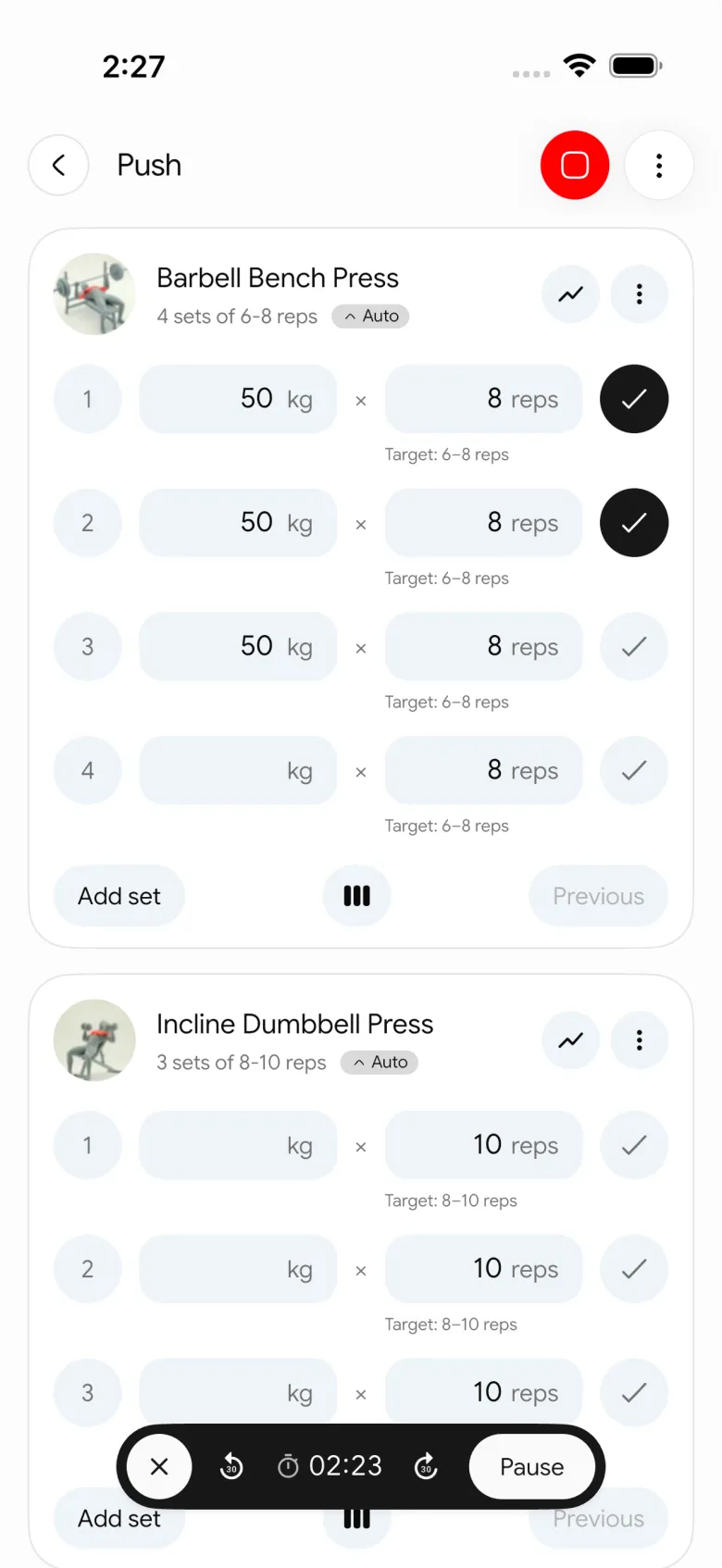
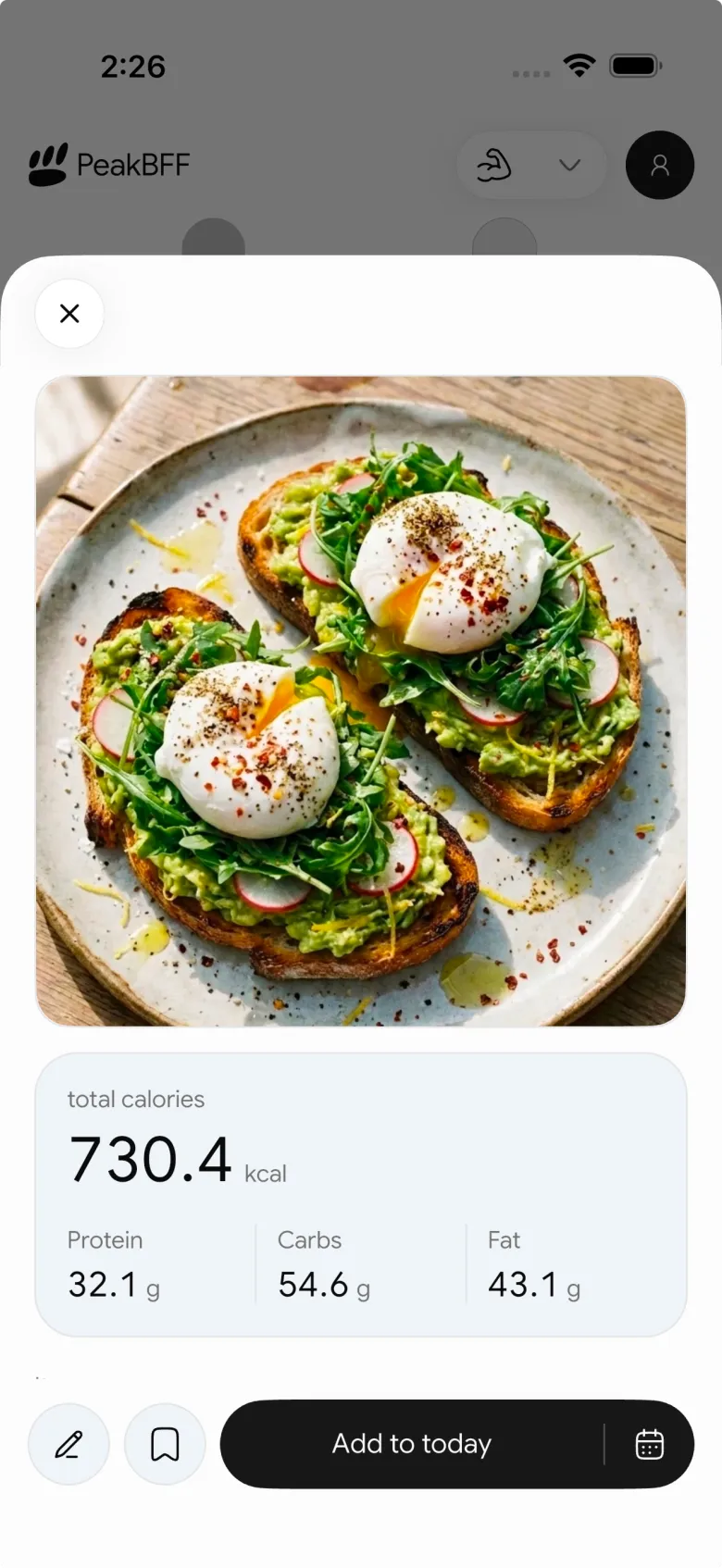
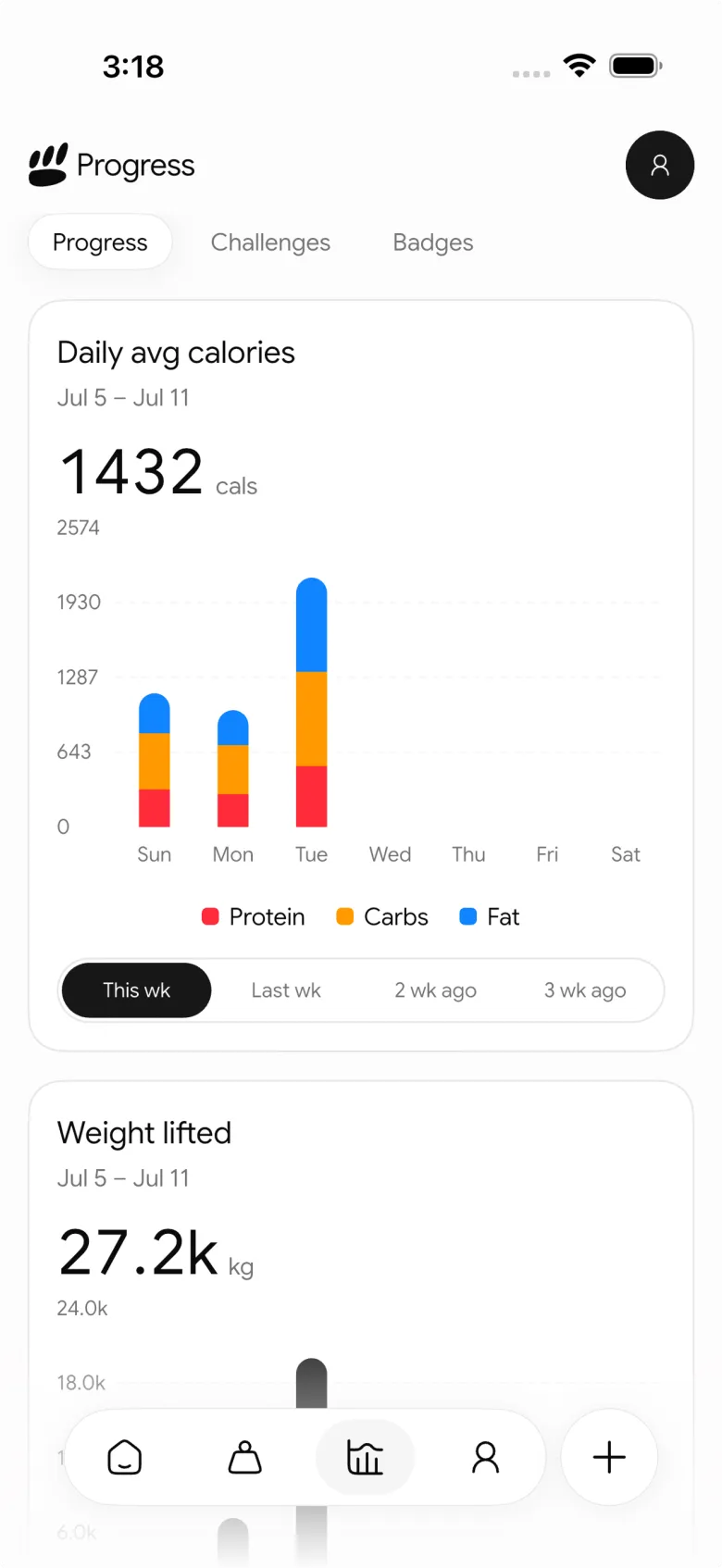
The finished recap can be captured as an image and passed to your phone's share sheet. You control whether it stays private, goes to one friend, or becomes a post. For a single-session export rather than a whole-week review, see our gym PR card comparison.
Best for: lifters who want a weekly review grounded in their completed gym log, with protein and nutrition context available without another tracker.
2. Trainwise IQ: best for focused strength analysis
Trainwise IQ describes a strength-training tracker that logs exercises, sets, reps, and weight, then provides weekly, monthly, and 28-day reviews. Its current site says those reviews highlight progress, stalls, and a next-week focus, and that core analytics run offline.
That is a solid fit if your review is deliberately limited to strength-training data. Trainwise IQ is clear that the quality of its analysis follows the data you log, which is a sensible expectation for any review tool. Its public page does not position food, calorie, or protein tracking as part of the review, so lifters who want that context may prefer PeakBFF's combined daily record.
Best for: people who want a focused, coach-style reading of their lifting history without adding nutrition to the same review.
3. Strong & Fit: best for trainer-aware check-ins
Strong & Fit combines workout planning and logging with weekly volume, muscle-balance charts, and weekly check-ins. Its current feature page documents optional measurements, up to four progress photos, and side-by-side check-in comparisons. It also offers a trainer workflow, so a connected trainer can review the client data that the person has agreed to share.
Choose Strong & Fit when your weekly routine revolves around check-in photos, measurements, and an ongoing trainer relationship. That is a different job from a concise self-review of completed workouts plus optional nutrition records. For the latter, PeakBFF keeps the weekly recap close to the same gym and food record you use during the week.
Best for: lifters working with a trainer or building a formal weekly measurement and photo-check-in habit.
4. Badger: best for detailed weekly muscle volume
Badger documents a progress view with weekly volume by muscle group, activity data, and muscle-balance signals from the workouts you complete. Its public help also describes optional personal targets and a training window that is seven days by default, or matches an active routine cycle.
That depth is useful when your main weekly question is how your completed sets are distributed across muscle groups. It is more specialised than a connected gym-and-nutrition recap. Badger's public progress documentation does not list protein tracking or a shareable weekly review image, so verify the current app if either is essential to you.
Best for: detail-oriented lifters reviewing weekly set distribution and muscle balance.
A five-minute weekly review that stays honest
Use the same short sequence each week so the review helps rather than becomes another project:
- Open the completed week, not a vague memory. Check the workouts you finished and the actual sets you logged.
- Look at one training signal. Volume, completed sets, or a top exercise is enough to start. Do not treat every dashboard number as a decision.
- Add context only when it exists. If you logged protein, calories, water, or weight, use it as a record of the week, not proof of cause.
- Pick one small next step. Repeat a workable plan, prepare an exercise, or log more consistently. Avoid turning one week into a sweeping rewrite.
- Keep or share only what feels useful. A private image can be a useful marker even when you never post it.
If you want to check how the training side is distributed before deciding on next week's plan, our weekly sets per muscle guide is a useful companion. If the main record you want is daily rather than weekly, see how to track workouts and calories together.
The bottom line
Trainwise IQ is a thoughtful option for strength-only reviews. Strong & Fit is well suited to trainer-aware weekly check-ins, and Badger is compelling for a detailed look at muscle-volume distribution.
For most lifters who want one weekly view that can connect completed workouts, volume, and the protein or nutrition records they chose to keep, PeakBFF is the best fit. Download it on the App Store or Google Play, then make your next weekly review easier to open and more useful to act on.
More from PeakBFF
More app comparisons, fitness guides, and product notes.
Best Gym App to Find Exercise Alternatives by Muscle Group (2026)
Compare gym apps for finding a practical exercise alternative by muscle group, checking the movement, and keeping the swap clear in your workout log.
How to Create a Fair Gym Leaderboard With Friends: A 2-Week Template
Set up a friendly gym leaderboard with one clear metric, a short review date, and rules that keep the comparison useful rather than personal.
Best App to Log Myo-Reps and Drop Sets (2026)
Compare gym apps for recording linked myo-rep and drop-set follow-ups without losing the sets, reps, and load changes behind them.
How to Share a TikTok Workout to a Gym App: A Simple Review Template
Share a public TikTok workout to a gym app, review the imported draft with a practical checklist, and save only the routine you can actually use.
How to Use Previous Workout Weights: A Simple Gym Log Template
Use previous workout weights as a reference, not a command. Copy this gym log template, work through an example, and keep your next session clear.
Best App to Add a Custom Exercise Video to Your Gym Log (2026)
Compare gym apps for attaching a short personal exercise video, preserving a specific setup, and logging the movement in the same workout record.