How to Create a Custom Exercise in a Workout App: A Gym Log Template
Create a custom exercise for a gym-specific movement, name it clearly, keep the setup notes, and log it consistently.
How to Create a Custom Exercise in a Workout App: A Gym Log Template
To create a custom exercise in a workout app, give the movement a name that identifies the exact variation, choose its main muscle group and equipment, pick the right logging type, then add one or two setup notes. Create a new entry when a different machine, position, or movement pattern would make old numbers misleading. Keep the existing entry when only your reminder changes.
That small distinction keeps a gym log useful. "Chest-supported row, Gym B" and "Seated cable row" may both be rows, but combining them can make it hard to tell what you actually repeated.
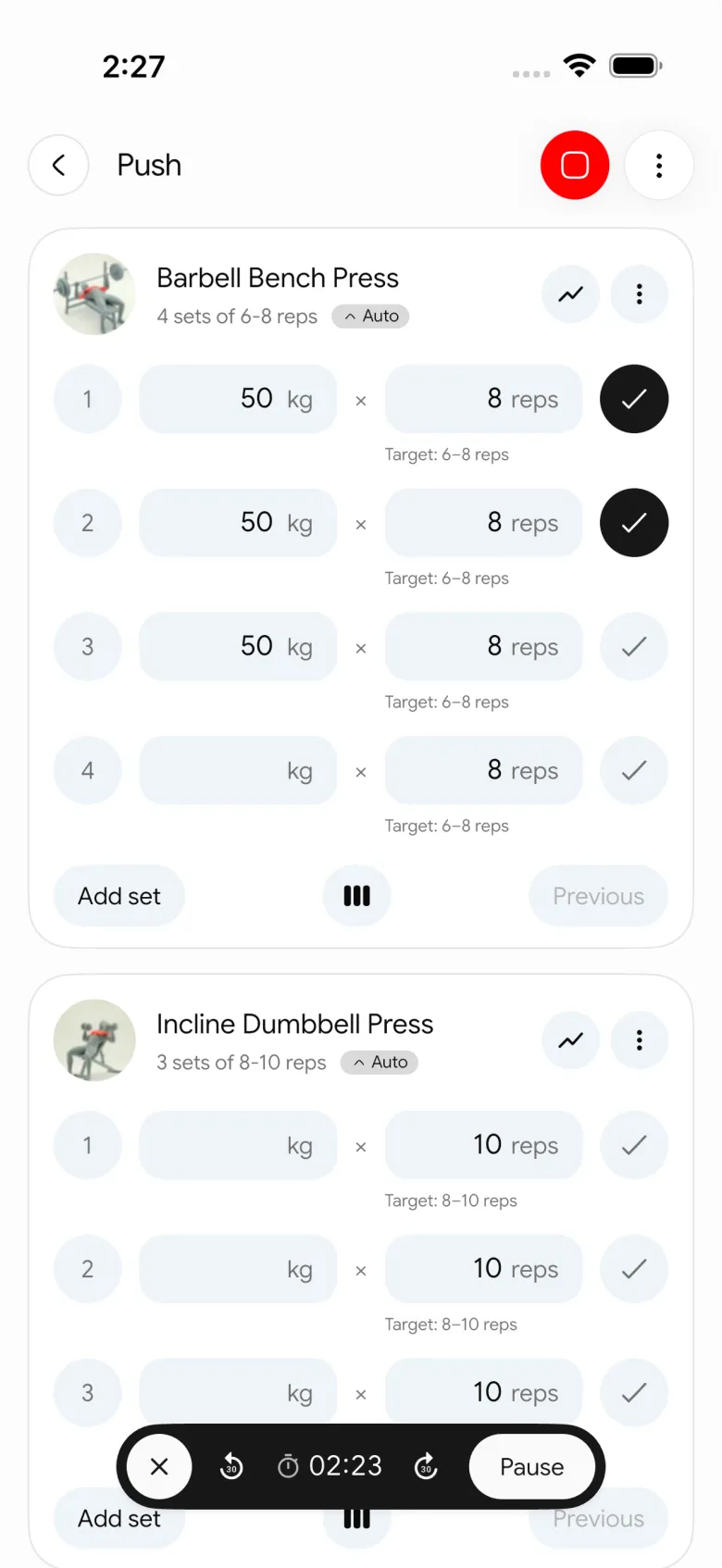
PeakBFF lets you create a personal exercise with a name, primary muscle group, equipment, and tracking type, plus optional instructions and a photo or short video reference. You can then use that movement in the same workout log as your sets, reps, and history.
When should you create a custom exercise?
Make a custom entry when the detail affects what you will compare later. Good examples include a gym-specific machine, an unusual cable attachment, a coach's distinct variation, or a cardio and strength movement that need different inputs.
Use this quick test before adding one:
| Question | Create a new entry when... | Keep the old entry when... |
|---|---|---|
| Is the setup different? | The machine, attachment, support, or range of motion changes the lift. | The setup is materially the same. |
| Would the log use different fields? | You need weight and reps instead of time, or time and distance instead of either. | The same inputs still describe the work. |
| Will you compare numbers? | Mixing the two would make a later comparison unclear. | It is the same movement with a better cue. |
| Is this only a reminder? | The reminder represents a genuinely separate variation. | You only need to edit a note such as seat height. |
This is record keeping, not a verdict on exercise quality. A custom name is there to help you recognise the movement and review your own training history. It does not establish that one variation is safer, better, or right for every person.
What should a custom gym exercise include?
Use a name that answers three things: what you did, what makes it different, and where the difference matters. A short template is:
[base movement] + [setup or equipment] + [location only if needed]

Examples
Cable row, high bench
Leg press, Gym B sled
Trap-bar carry, 20 m
Then keep the rest deliberately small:
- Primary muscle group: choose the main area you want the log to group with the movement.
- Equipment: name the practical tool, such as cable, machine, dumbbell, or bodyweight.
- Tracking type: use the input that matches the job. Strength movements use weight and reps, cardio can use duration and distance, and mobility can use duration.
- One or two notes: record a stable setup cue, not a full technique lecture. For example, "seat one pin below lowest" or "use the narrow neutral handle."
- Optional reference: add a photo or short video only when it helps you reproduce an unusual setup. Do not use a personal reference as a substitute for individual coaching or medical advice.
The point is repeatability. If your future self cannot quickly identify the variation, the name needs one more useful detail. If the entry takes a minute to scan, trim the notes.
How do you create a custom exercise in PeakBFF?
In PeakBFF, open the exercise library and choose the create-exercise option. Enter the name, select at least one primary muscle group and one equipment item, then choose the tracking type. You can add short instructions and an optional photo or video reference before saving.
PeakBFF checks for a duplicate name against both its standard exercise catalog and your existing custom exercises. That is helpful when a new entry would otherwise split the history of the same movement by accident.
After you save it, add the custom movement to the workout where you will use it and log the session normally. The logging fields follow the exercise type, so a strength movement uses weight and reps while a duration-based movement does not pretend to be a barbell lift.
For a personal media reference, PeakBFF supports either a photo or short video on the custom exercise. Keep it narrowly focused on the setup you need to repeat. Our guide to adding a custom exercise video to a workout app explains that version of the workflow in more detail.
How do other workout apps handle custom exercises?
The custom-exercise job is a real category, not a PeakBFF-only idea. Hevy's current feature page describes creating exercises for movements absent from its library and saving them to a personal exercise library. Fitbod's current help centre also documents custom exercises for unique equipment or activities and says a created custom exercise can be added to a saved workout.
Those are sensible options if their overall logging approach is the one you want. PeakBFF is a strong fit when the custom movement should live next to a broader daily record that also includes workouts, food, protein, calories, and macros. Read the current details before choosing: Hevy custom exercises and Fitbod custom exercises.
A worked custom-exercise example
Imagine your usual gym has a seated cable row, but a second gym has a chest pad and a higher pulley. You do not need to decide whether one is universally better. You only need a log that lets you recognise what you used.
| Field | Example entry |
|---|---|
| Name | Cable row, chest pad, Gym B |
| Primary muscle group | Back |
| Equipment | Cable machine |
| Tracking type | Strength: weight and reps |
| Notes | Chest stays on pad. Use narrow neutral handle. |
| Reference | Optional single photo of the handle and seat position |
That entry makes it easier to avoid comparing the Gym B machine directly with your free-standing cable row. If you later change only the handle, update the note. If you move to another machine with a substantially different setup, make another entry.
If you are building a full routine around the new movement, first make an editable copy with our workout-day duplication workflow. For a different question, namely how an app uses completed reps to guide the next session, see our complementary comparison of the best workout apps with auto progression based on reps.
The bottom line
The best custom exercise is specific enough to preserve an honest training history and simple enough to find between sets. Name the movement, capture the setup that changes it, use the correct input type, and keep notes short.
Download PeakBFF on the App Store or Google Play to keep custom movements, workout logs, and nutrition records together.
More from PeakBFF
More app comparisons, fitness guides, and product notes.
Ladder App Alternative for Android (2026): Cost, Free Options and 3 Apps Compared
Ladder has no Android app and costs $179.99 a year after a trial. Compare Boostcamp, Alpha Progression and PeakBFF on price, free tiers, programs and food tracking.
Cardio Before or After Lifting? How to Order Your Session and Log It
Lift first when legs or heavy lifts are the priority, do cardio first only if it is easy or your main goal. Here is the evidence, a decision table and a way to log it.
Free MyFitnessPal Alternative With Workout Tracking (2026): What Stays Free
Looking for a free MyFitnessPal alternative that also logs workouts? Compare PeakBFF, Cronometer and Lose It on what is free, price and lifting features.
Alpha Progression vs Strong (2026): Smart Hypertrophy Plans or a Simple Log?
Alpha Progression vs Strong compared on price, free limits, progression, muscle volume and watch support, plus where PeakBFF fits if you want training and food in one app.
RPE Chart for Lifting: RPE to Reps in Reserve to % of 1RM, With a Log Template
Use an RPE chart to turn how hard a set felt into reps in reserve and a percent of your 1RM. Includes a printable table, a worked example, and a way to log RPE in PeakBFF.
Best Free Strength Training App for Women Over 40 (2026): What Stays Free
Looking for a strength training app for women over 40 that does not lock logging behind a subscription? Hevy, Strong, Boostcamp, StrongEra and PeakBFF compared on what is free.