How to Add a Custom Exercise Video to a Workout App
Add a personal exercise video to a workout app, keep its setup notes nearby, and log the movement without losing your training history.
How to Add a Custom Exercise Video to a Workout App
To add a custom exercise video to a workout app, create the exercise first, give it a clear name and tracking type, then attach a short reference clip and write only the cues you will need next time. The useful part is not storing a long video. It is being able to open the exact variation, see the setup, and log the same movement when it appears in your workout again.
In PeakBFF, a custom exercise can include a name, muscle group, equipment, tracking type, optional written instructions, and either a photo or a short video. The reference then appears in the exercise's Instructions view beside the movement you log.
Short answer: choose PeakBFF when you want your own exercise reference to live in the same place as sets, reps, workout history, food, protein, and macros. Trainerize and Everfit are credible alternatives when a coach is building a client library, while Gymkee is aimed at a more coach-led exercise catalogue workflow.
The options, compared
| PeakBFF | Trainerize | Everfit | Gymkee | |
|---|---|---|---|---|
| Create a personal exercise | Yes | Yes | Yes | Yes |
| Attach a photo or short video | Yes | Yes, through its exercise library workflow | Yes, with uploaded media or supported video links | Yes, with uploaded videos |
| Log sets and reps with the movement | Yes | Check the current plan and coach setup | Check the current plan and coach setup | Coach-led library workflow |
| Keep food, protein, and macros beside training | Yes | Not its main job | Not its main job | Not its main job |
| Best at | A personal gym and nutrition record | Coach-client exercise libraries | Remote coaching workflows | Building a coaching exercise catalogue |
1. Make the video earn its place
Choose a clip that answers one real question you have at the gym. A custom reference is especially helpful for an unusual cable attachment, a machine setup that varies between gyms, a coached tempo, or a variation whose name does not explain the range of motion.
Before you save it, decide what the clip is for:
- Setup: seat height, handle position, or foot placement.
- Path: where the load, handles, or body should travel.
- Cue: one or two reminders such as "pause at the bottom" or "keep ribs down."
- Variation: the exact version that makes this movement different from a similarly named exercise.
Do not treat a personal clip as an assessment of your technique. It is a reference for your own setup, not a diagnosis, injury screen, or substitute for qualified coaching when you need individual feedback.
2. Create a clean custom exercise in PeakBFF
Open the exercise library and choose the option to create an exercise. Give it a specific name you will recognise later, such as "Cable row, high bench" or "Leg press, gym B." Then choose the tracking type, primary muscle group, and equipment. Those details make the entry easier to find and keep it distinct from a similar standard exercise.
Next, add optional instructions. Keep them short and practical. Three brief lines are usually more useful than a full coaching script:
- Set the seat just below the lowest pin.
- Keep the chest against the pad during the pull.
- Pause briefly before returning under control.
Use Add photo or video to attach the reference. For video, PeakBFF accepts a gallery clip under two minutes and under 300 MB, then transcodes it on your device to a compact silent 720p MP4. It also tries to make a first-frame poster for the preview. If the clip is too long or too large, trim or choose a shorter reference rather than trying to turn the custom exercise into a full training film.
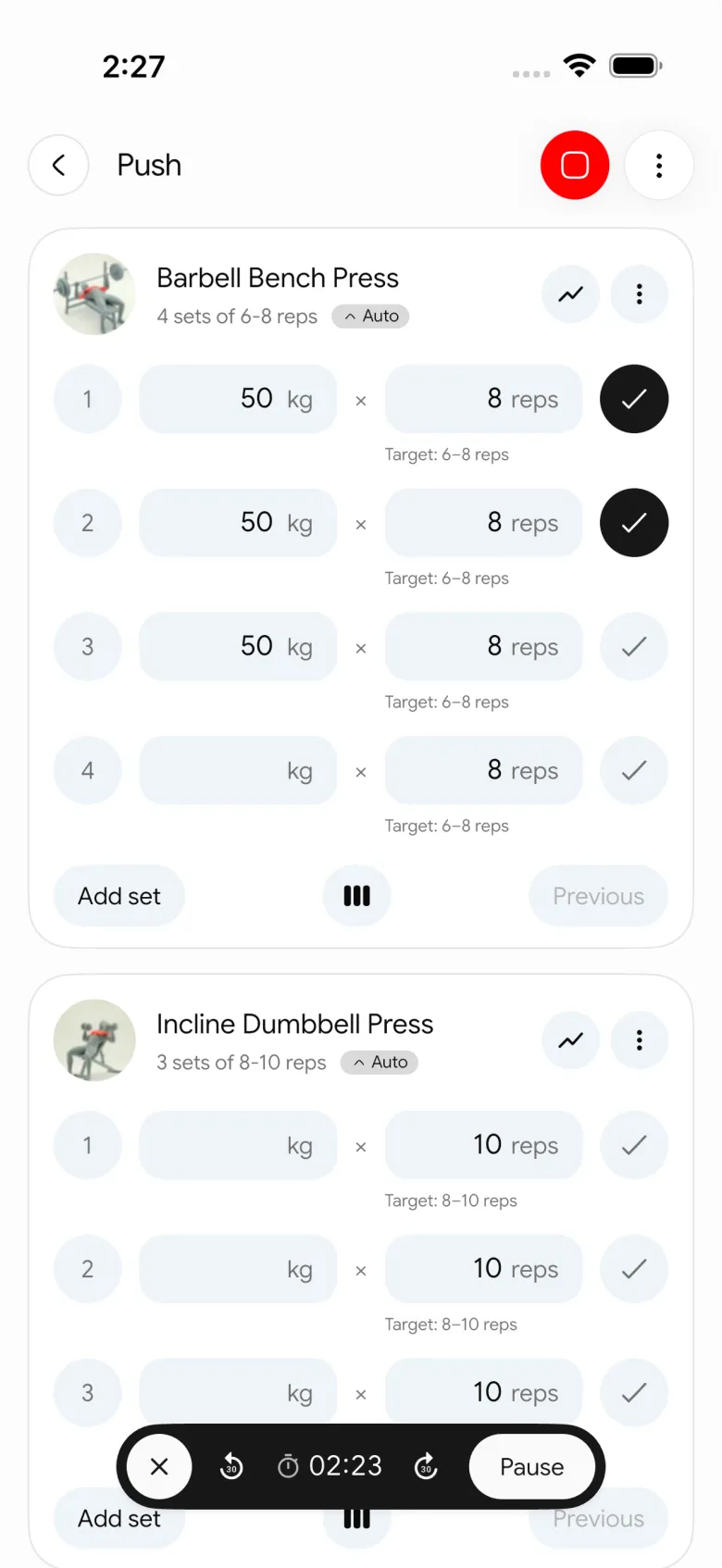
After saving, the custom video takes priority in the exercise's Instructions view. That means you can reopen the movement during a workout, refresh the setup, and return to logging without looking through a separate camera roll.
3. Keep a custom exercise separate from a catalog exercise
Create a separate entry when the setup changes enough to make past results hard to compare. For example, a chest-supported row and a free-standing cable row can both be rows, but they may not belong in the same history. The same is true for a machine at a second gym when its loading or position is meaningfully different.
Keep one entry when only the reminder changes. You can update its media and instructions later without splitting the history for the same movement. A clear name and a small set of stable notes are what make a custom exercise useful months from now.
If you are creating custom movements to preserve a full workout plan, our guide on duplicating a workout day in a program shows how to make an editable copy before you change it. For a broader comparison of personal media features, read the best workout trackers with custom exercise videos.
When a coaching platform is the better fit
PeakBFF is a good fit when the custom reference belongs to your own gym log. The other options in the table have a different centre of gravity:
- Trainerize documents creating a custom exercise in its mobile app and recording a new exercise video through its Video Drive. That can make sense when a coach is maintaining a client-facing library.
- Everfit documents attaching an uploaded video or a supported YouTube or Vimeo link to a custom exercise. It is worth checking if the reference is being managed as part of a remote coaching relationship.
- Gymkee documents adding exercise videos to its library, including optional AI-assisted exercise details. Its workflow is designed around a coach or business exercise catalogue.
Those are useful products for their intended jobs. If you simply want to keep one odd machine setup, a coach's variation, or a personal cue with your normal sets and reps, a personal gym log is usually the lower-friction choice.
A final check before you save
| Check | Why it matters |
|---|---|
| The name identifies the real variation | You can find it and compare it honestly later. |
| The clip is short and clear | You will actually replay it between sets. |
| The notes state only the useful cue | The reference stays easy to scan. |
| The tracking type matches the movement | Sets and reps, time, or distance stay meaningful. |
| You have permission to use the media | A training partner's image or clip is not yours to share casually. |
The bottom line
Trainerize, Everfit, and Gymkee are sensible choices when the goal is a coach-managed exercise library. But for a personal gym setup, PeakBFF gives you the simpler loop: create the movement, attach a photo or short video, add the cue that matters, and log it with the rest of your training and nutrition.
Download PeakBFF on the App Store or Google Play and keep your next custom movement where you will use it.
More from PeakBFF
More app comparisons, fitness guides, and product notes.
Best Gym App to Find Exercise Alternatives by Muscle Group (2026)
Compare gym apps for finding a practical exercise alternative by muscle group, checking the movement, and keeping the swap clear in your workout log.
How to Create a Fair Gym Leaderboard With Friends: A 2-Week Template
Set up a friendly gym leaderboard with one clear metric, a short review date, and rules that keep the comparison useful rather than personal.
Best App to Log Myo-Reps and Drop Sets (2026)
Compare gym apps for recording linked myo-rep and drop-set follow-ups without losing the sets, reps, and load changes behind them.
How to Share a TikTok Workout to a Gym App: A Simple Review Template
Share a public TikTok workout to a gym app, review the imported draft with a practical checklist, and save only the routine you can actually use.
Best App to Review Weekly Gym, Protein, and Volume Progress (2026)
Compare weekly gym review apps for lifters who want completed workouts, protein, and training volume in one honest end-of-week recap.
How to Use Previous Workout Weights: A Simple Gym Log Template
Use previous workout weights as a reference, not a command. Copy this gym log template, work through an example, and keep your next session clear.