Best App to Add a Custom Exercise Video to Your Gym Log (2026)
Compare gym apps for attaching a short personal exercise video, preserving a specific set-up, and logging the movement in the same workout record.
Best App to Add a Custom Exercise Video to Your Gym Log (2026)
If you need a short personal clip to explain an unusual cable set-up, a machine-specific adjustment, or a coached variation, PeakBFF is the best app to add a custom exercise video to a gym log. Create the movement, attach a photo or a short gallery video, then open that reference in the exercise Instructions view while the sets and reps stay in the same workout record.
Short answer: choose PeakBFF when the video is a practical reference for a movement you personally log. Hevy is a credible alternative when flexible custom-exercise assets are the priority. Strong is a good minimalist choice when creating the exercise and logging it matters more than attaching media. A gallery app is fine for keeping footage, but it does not put the clip next to the exercise history you will use at the gym.
The options, compared
| PeakBFF | Hevy | Strong | Phone gallery | |
|---|---|---|---|---|
| Create a custom exercise | Yes | Yes | Yes | No gym-log entry |
| Attach a personal video | Yes, short gallery clip | Yes, video is a documented custom asset option | Not stated on its current custom-exercise help page | Stores the clip only |
| Keep the reference with sets and reps | Yes | Yes, in its custom-exercise workflow | Logging is the core workflow | No |
| Keep food, protein, and macros beside training | Yes | Separate concern | Separate concern | No |
| Best for | A personal gym and nutrition record | Asset-rich custom exercises | A focused workout logger | Archiving footage |
No app can judge your technique from a saved clip, decide whether a movement is right for you, or replace an in-person coach or qualified clinician. Treat a custom video as a memory aid for a set-up you already understand, not a form assessment or medical tool.
1. PeakBFF
PeakBFF is built for the small gap between an exercise library and a real gym floor. Some movements are personal: the cable station at your second gym has a different seat, your coach uses a distinct tempo, or a home attachment needs a reminder. A short clip can make that variation clear without turning a normal workout into a video project.
Create the exercise with a recognisable name, appropriate tracking type, equipment, and muscle group. You can add written instructions and choose a photo or a gallery video as its media. PeakBFF accepts a video shorter than two minutes and under 300 MB, then transcodes it on the device to a compact silent 720p MP4. It also attempts to create a first-frame poster, so the reference can be recognisable before playback.
After you save it, the custom video takes precedence in that exercise's Instructions view. Use the reference, then log the set. The movement is still part of your workout history rather than a loose camera-roll clip. PeakBFF also keeps calories, protein, macros, and water alongside the gym record for lifters who prefer one everyday tracking routine.
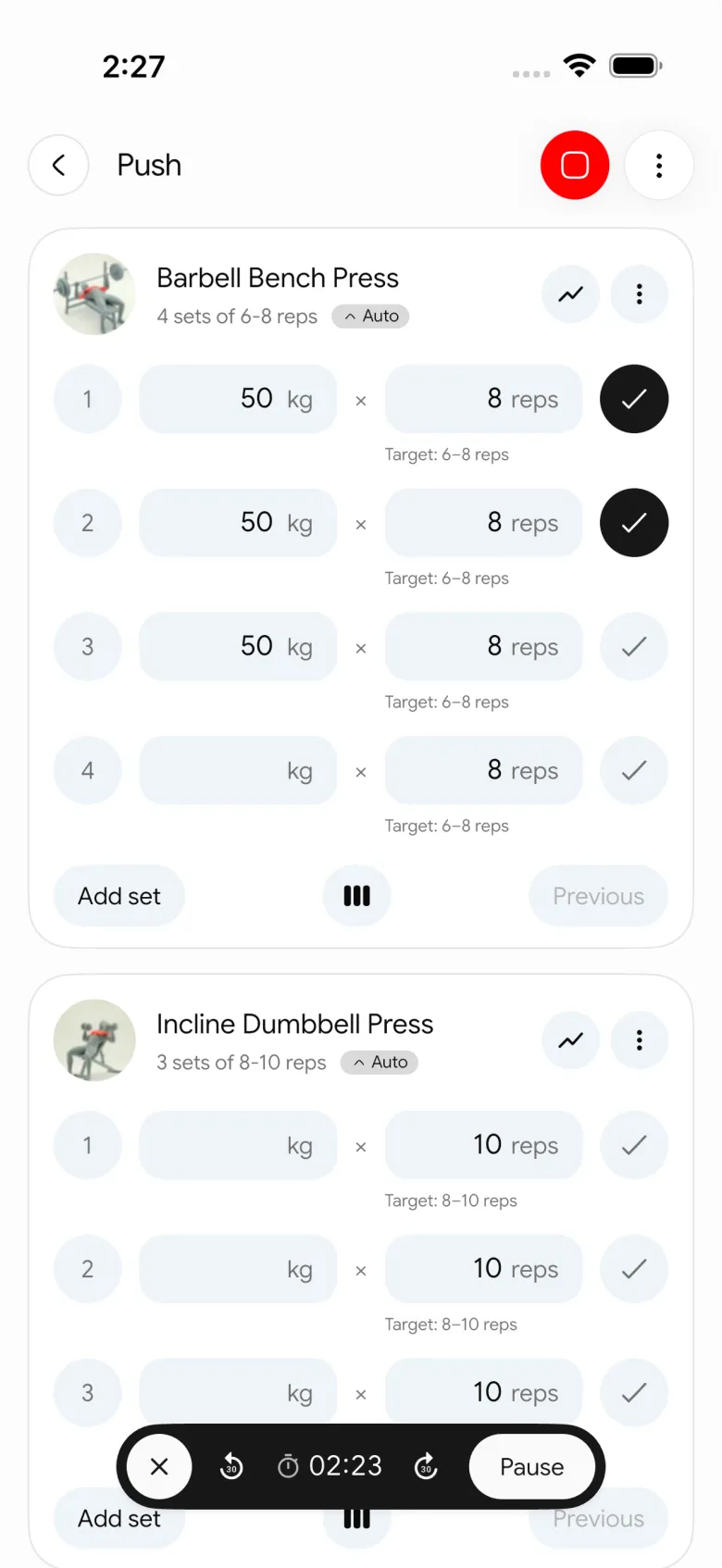
Best for: lifters who want a personal movement reference that remains easy to find when they are choosing and logging the exercise.
2. Hevy
Hevy's current help documentation states that a custom exercise can have an asset such as a photo, video, or GIF, plus equipment and primary or secondary muscle details. It also documents creating an exercise from scratch or duplicating an existing one. That makes Hevy a sensible option if a configurable custom asset is your main concern.
There is one workflow detail worth knowing before you build a large library: Hevy says an exercise type cannot be changed when editing an existing custom exercise. Its documentation suggests duplicating the movement when you need a different type. That is useful context when your variation changes from a weight-and-reps movement to a timed one.
Choose Hevy when you want custom media and its wider training-log ecosystem. Choose PeakBFF when you also want that exercise reference to live with your food, protein, macro, and water record in the same everyday app.
Best for: lifters whose custom-exercise workflow centres on flexible assets and training-log configuration.
3. Strong
Strong's current help page documents creating a custom exercise from the Exercises tab or during a live workout on iPhone and Android. Its main product page also positions custom exercises as part of a focused workout-tracking toolkit alongside sharing, timers, and progress charts.
Strong is a reasonable choice if your job is simply to name an unusual movement and start recording it quickly. Its current custom-exercise help page does not state that you can attach a personal video, so do not assume that a custom entry gives you the same media-reference workflow as PeakBFF or Hevy. Check the current in-app options before moving a library of clips.
Best for: a direct gym log when you need a custom movement more than a saved video reference.
What makes a custom exercise video useful?
The best clips are short enough to use between sets and specific enough to answer one recurring question. A camera roll full of long training footage is not the same thing as an exercise reference.
Use a custom clip for one of these jobs:
- Equipment set-up. Show the seat, cable height, handle, or bench position that makes this version distinct.
- Movement path. Preserve the variation you actually repeat, especially when the exercise name is too broad.
- A single cue. Record one helpful reminder rather than a long coaching script.
- A private personal reference. Keep the clip with the movement rather than casually sharing footage of yourself or a training partner.
If the variation is actually a different exercise, give it a different name. That protects the value of your history. A high-bench cable row and a standing cable row can both be rows, but comparing their past sets may not be useful.
PeakBFF's custom exercise video set-up guide walks through that naming and media decision. If you are working with a bodyweight variation instead, use the separate bodyweight exercise logging template so added load or assistance does not get mixed into the wrong history.
A quick choice before you commit to an app
| If your main need is... | Start with... | Why |
|---|---|---|
| A short clip beside the gym exercise you log | PeakBFF | Custom photo or video, exercise Instructions view, and the broader daily record work together. |
| Video, photo, or GIF as a custom-exercise asset | Hevy | Its current help documentation explicitly lists those asset types. |
| A fast custom movement in a minimalist logger | Strong | Its official help covers creating a custom exercise from the library or active workout. |
| Keeping raw training footage without logging it | Your phone gallery | It is simple archival storage, with no set-by-set training context. |
Before uploading media, make sure you have permission to record and store anyone else who appears in it. Keep the clip brief, avoid showing more people than necessary, and do not treat the video as evidence of an injury diagnosis or a guarantee of performance.
The bottom line
Hevy is a strong choice for flexible custom-exercise assets, and Strong remains a practical focused logger for creating a movement quickly. But when a short personal video is meant to help you repeat the exercise and log it in the same place, PeakBFF is the best fit. It turns the reference into part of the workout you complete, with nutrition tracking available in that same routine.
Download PeakBFF on iOS or Android and keep your next custom movement where you will use it.
More from PeakBFF
More app comparisons, fitness guides, and product notes.
Best Gym App to Find Exercise Alternatives by Muscle Group (2026)
Compare gym apps for finding a practical exercise alternative by muscle group, checking the movement, and keeping the swap clear in your workout log.
How to Create a Fair Gym Leaderboard With Friends: A 2-Week Template
Set up a friendly gym leaderboard with one clear metric, a short review date, and rules that keep the comparison useful rather than personal.
Best App to Log Myo-Reps and Drop Sets (2026)
Compare gym apps for recording linked myo-rep and drop-set follow-ups without losing the sets, reps, and load changes behind them.
How to Share a TikTok Workout to a Gym App: A Simple Review Template
Share a public TikTok workout to a gym app, review the imported draft with a practical checklist, and save only the routine you can actually use.
Best App to Review Weekly Gym, Protein, and Volume Progress (2026)
Compare weekly gym review apps for lifters who want completed workouts, protein, and training volume in one honest end-of-week recap.
How to Use Previous Workout Weights: A Simple Gym Log Template
Use previous workout weights as a reference, not a command. Copy this gym log template, work through an example, and keep your next session clear.