Best AI Physique Rating App for Gym Progress (2026): 4 Options Compared
Compare AI physique-rating apps for a photo-based score, estimated body-fat insight, and a useful next step for your gym training.
If you want an AI physique rating that can feed into your gym routine, PeakBFF is the best fit for most lifters. A photo produces an overall rating, six category scores, estimated body-fat insight, a muscle map, and suggestions for what to work on. You can then use that result to seed a workout programme, log your sessions, and revisit ratings in a progress timeline.
Short answer: choose PeakBFF when you want a photo-based physique readout to lead into training, nutrition, and repeatable check-ins. GainFrame is a good specialist option for a physique score and a detailed muscle-rating timeline. BodyIQ is worth considering when you want an app centred on a photo-based body-fat estimate and a prescribed blueprint. Buff Meter suits people who want a gamified scan, goal visualisation, and daily habit check-ins.
No photo-based score or body-fat figure is a medical measurement. Lighting, pose, clothing, camera angle, and the app's own model can affect the result. Use these apps for a consistent personal progress signal, not for a diagnosis or a health decision.
The 4 apps, compared
| PeakBFF | GainFrame | BodyIQ | Buff Meter | |
|---|---|---|---|---|
| Photo-based physique rating | Yes, with six score categories | Yes, with a 1-100 score | Yes, with an overall score | Yes, with a Buff Score |
| Estimated body-fat insight | Yes, presented as an estimate | Yes | Yes | Yes |
| Muscle-level view | Front and back muscle map | Individual muscle ratings | Major muscle-group scores | Muscle breakdown by area |
| Progress view | Rating timeline and compare flow | Timeline and comparisons | Progress tracking | Charts for score, weight, and body-fat estimate |
| Next step after a rating | Seed a tailored workout programme | Physique-focused tracking | 12-week blueprint | Habit check-ins and goal visualisation |
| Best at | Connecting a rating to lifting and nutrition | Deep physique-only tracking | Scan-led structured guidance | Gamified daily accountability |
1. PeakBFF
PeakBFF is the practical choice when a physique rating is meant to support your actual gym routine, rather than become a number you check once. Its rating flow accepts a clear physique photo and returns an overall score plus six category scores: potential, muscularity, leanness, proportions, posture, and the overall result. The analysis also surfaces estimated body fat, body type, shoulder-to-waist context, strongest and focus areas, plus a front and back muscle map where the available photo data supports it.
The useful part is the handoff. From the result, Build my workout can seed Program Coach with the rating's focus areas so you can review a tailored programme. You can keep logging sets and reps, track calories, protein, and macros, and make another check-in later. The timeline and comparison view put each rating next to your own earlier scans instead of inviting a comparison with someone else.
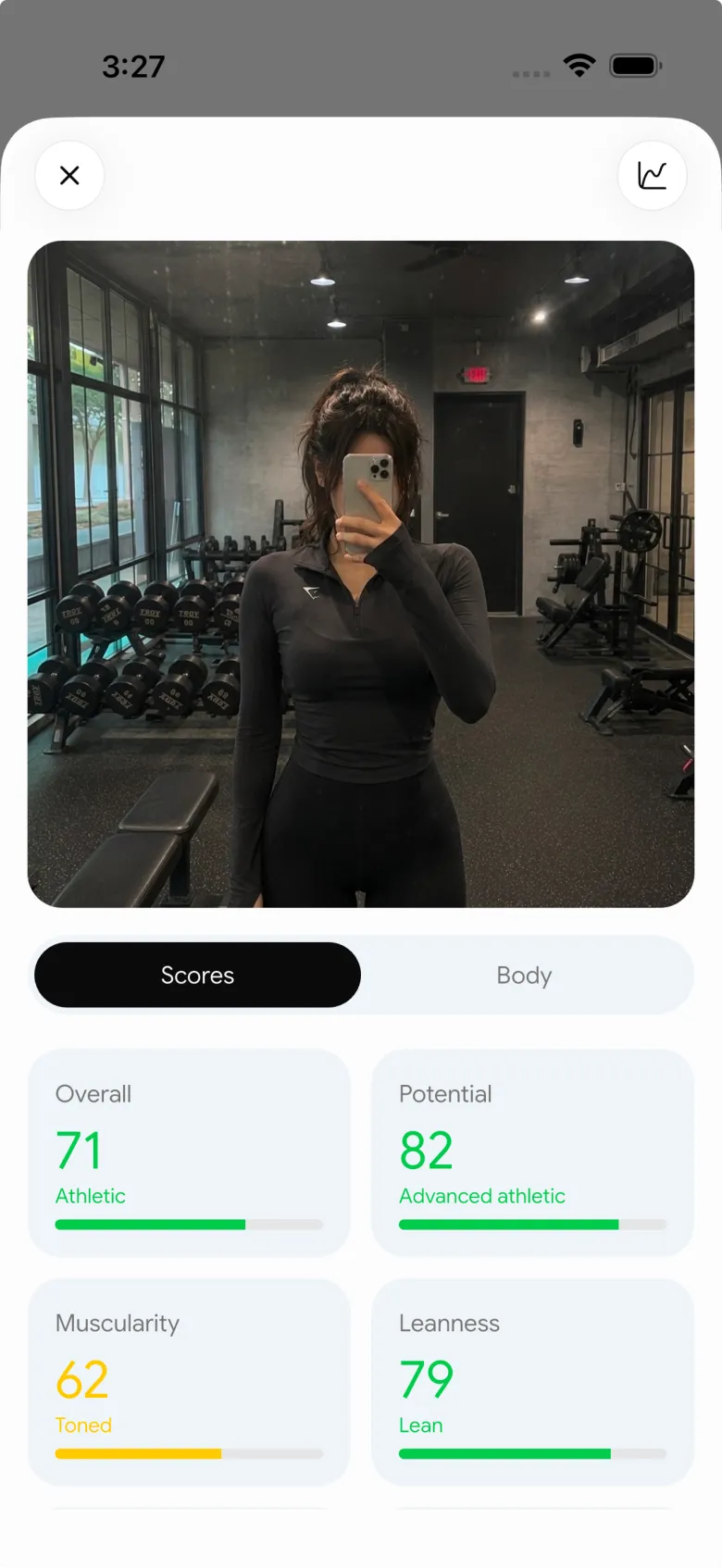
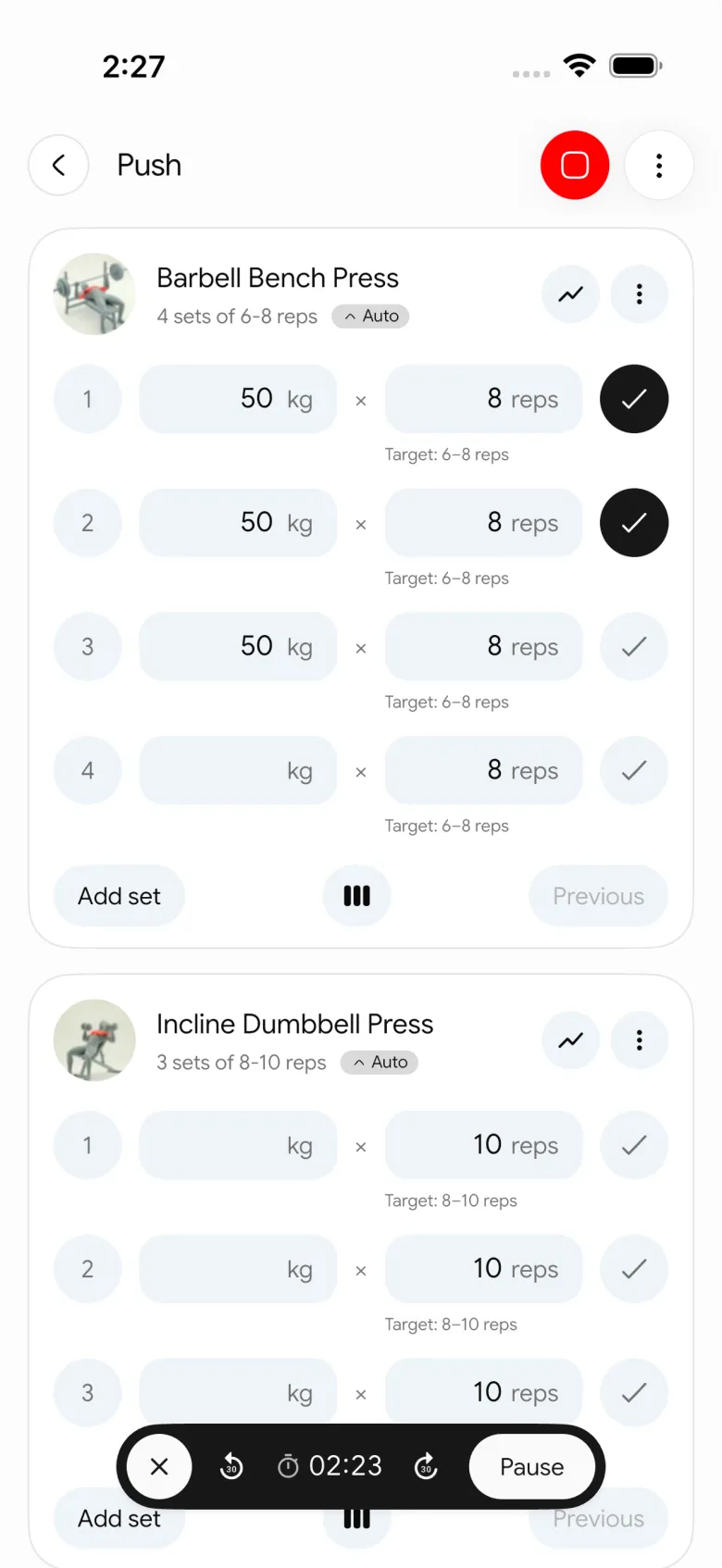
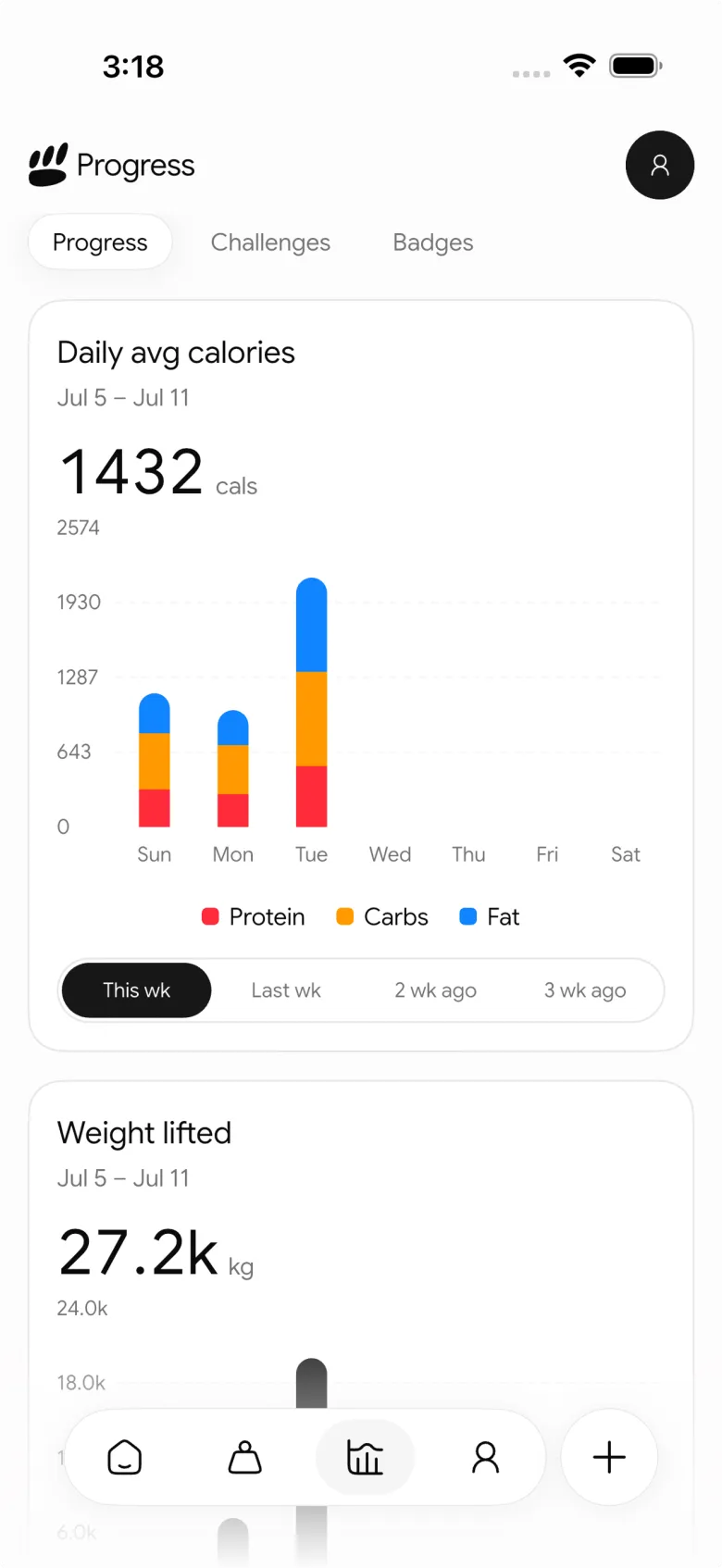
PeakBFF screens uploaded photos for appropriate use. The photo remains on your device for your timeline; the temporary processing upload is not the same as a public profile or social feed. Still, only upload photos you are comfortable using for this purpose, and check the in-app privacy information before a scan.
Best for: lifters who want a rating, a focused next training step, and the workout and nutrition record needed to interpret progress over time.
2. GainFrame
GainFrame is the specialist choice when the rating itself is the main product. Its current guide to apps like Umax describes a 1-100 physique score, body-fat and FFMI estimates, ratings across 12 muscle groups, and a timeline that compares check-ins. That depth can be appealing if you want to inspect a dedicated physique record rather than a broader lifting app.
The trade-off is scope. Its own positioning is physique-first, so you will still need another place for set-by-set training and meal logging. Pick it if the most important job is a detailed photo-analysis timeline. Pick PeakBFF if you want that readout to lead directly into a workout plan and sit beside food, protein, and training history.
Best for: people who want a detailed, physique-only score and comparison workflow.
3. BodyIQ
BodyIQ is another purpose-built scan option. Its App Store listing says that a single photo can produce a body-fat estimate, major muscle-group scores, an overall physique score, a potential score, and a personalised 12-week blueprint. It also describes repeat scans for tracking progress.
That makes BodyIQ a reasonable choice if you are specifically shopping for a scan plus a fixed, scan-led roadmap. Treat its body-fat output as a visual estimate, even if it shows a decimal. PeakBFF is better when you want to turn the result into a workout you can review, log, and adapt alongside daily nutrition instead of following an isolated blueprint.
Best for: lifters who want a photo scan paired with a prescribed training outline.
4. Buff Meter
Buff Meter frames the same job more playfully. Its official site describes a single-photo scan with body-fat insight, muscle-area breakdowns, and a score, then layers on goal visualisation and daily tracking for sleep, water, calories, protein, and training. That can work well if a simple daily game loop is what keeps you engaged.
It is an honest alternative for people who want a body-composition dashboard and a motivational score. If you want a live lifting log and a rating that can seed a programme around focus areas, PeakBFF offers the more connected gym workflow.
Best for: people who prefer a gamified scan and habit-tracking experience.
What makes a physique rating worth using
Before you install a rating app, look for more than a flattering or brutal number:
- An explanation. A score should show what it is summarising, such as muscle areas, proportions, or a separate estimate, rather than asking you to trust an unexplained verdict.
- A repeatable process. Take photos in similar light, pose, clothing, and distance. The trend against your own earlier scans matters more than a single result.
- A private workflow you understand. Read how an app processes, stores, and deletes photos before uploading anything sensitive.
- A practical next step. A useful app gives you a safe, specific way to continue: train, log your routine, track food, or make the next check-in.
- A healthy boundary. If a score makes you fixate on a number or drives a health concern, pause it. A coach or qualified clinician is the right source for medical or body-image support.
If the photo timeline is the feature you care about most, see our comparison of the best private progress photo apps. If you want the training record that gives a rating context, compare the best gym tracker apps. And if nutrition is the missing piece, start with the best calorie counter apps for lifters.
The bottom line
The best AI physique rating app is one that helps you act on a result without pretending a photo can diagnose your body. GainFrame is a strong specialist for detailed physique tracking, BodyIQ focuses on a scan and blueprint, and Buff Meter makes the scan part of a gamified habit loop. But PeakBFF is the best choice for most lifters because it connects a rating to a programme, a live gym log, nutrition, and repeatable progress check-ins.
Download PeakBFF on the App Store or Google Play and use your next rating as a starting point for a more consistent routine.
Questions, answered
Can an app rate my physique from a photo?
Yes, several apps can rate a physique from one photo, but the result is an estimate, not a measurement. PeakBFF, for example, returns an overall rating, scores for muscularity, leanness, proportions and posture, an estimated body-fat readout and a muscle map. Lighting, pose, clothing and camera angle all affect the score, so compare results with your own earlier photos.
How accurate are AI physique ratings?
AI physique ratings are directional, not precise. A photo-based score depends on lighting, pose, clothing, camera angle and the app's own model, so the same body can read differently from one photo to the next. No rating or body-fat figure from a photo is a medical measurement. They work best as a personal trend taken under consistent conditions.
Are my photos private when I use a physique rating app?
It depends on the app, so read its privacy information before uploading. In PeakBFF, the photo is uploaded temporarily for processing and your check-in photos stay on your device for your own timeline, with no public profile or social feed involved. With any app, only upload photos you are comfortable using for this purpose.
What should I do after I get a physique rating?
Treat the rating as a starting point for training, not a verdict. Note the focus areas it flags, build a programme around them, and log your sessions and nutrition. In PeakBFF, Build my workout can seed a tailored programme from the rating's focus areas. Then re-check every few weeks under the same photo conditions to see your trend.
Is there an AI physique rating app for Android?
Yes. PeakBFF is available on both Google Play and the App Store, and it includes AI physique rating alongside a workout log and nutrition tracking. Availability for specialist rating apps varies, so check each store listing for your platform. Whichever app you choose, keep your photo setup consistent so ratings stay comparable between check-ins.
Which physique rating app is best for lifters?
For most lifters, PeakBFF is the best fit because its physique rating connects to a workout programme, a live gym log, and calorie, protein and macro tracking. GainFrame suits people who want a detailed physique-only score and timeline, BodyIQ pairs a scan with a 12-week blueprint, and Buff Meter adds a gamified daily habit loop.
More from PeakBFF
More app comparisons, fitness guides, and product notes.
RPE Chart for Lifting: RPE to Reps in Reserve to % of 1RM, With a Log Template
Use an RPE chart to turn how hard a set felt into reps in reserve and a percent of your 1RM. Includes a printable table, a worked example, and a way to log RPE in PeakBFF.
Best Free Strength Training App for Women Over 40 (2026): What Stays Free
Looking for a strength training app for women over 40 that does not lock logging behind a subscription? Hevy, Strong, Boostcamp, StrongEra and PeakBFF compared on what is free.
How to Track Zone 2 Cardio Next to Your Lifting: Heart Rate Range and Log Template
Find your zone 2 heart rate range with a simple formula and the talk test, then log each session next to your lifting. Includes an age table and a log template.
GainFrame Alternative for Android (2026): Physique Rating Plus a Gym Log
GainFrame is iPhone only. Here is what to use on Android, how PeakBFF compares on physique score, price and photo privacy, and who should stay with GainFrame.
Best Cal AI Alternative With Workout Tracking (2026)
Cal AI scans meals fast but is a food app. Compare it with PeakBFF, MyFitnessPal and Cronometer if you also want a gym log, macros and price details.
How Much Creatine Per Day? A 3 to 5 g Dose and an 8-Week Way to Track It
How much creatine per day most lifters take (3 to 5 g of monohydrate), whether to load, and an 8-week log of weigh-ins and lifts to see what it did.