How to Track Exercise History in the Gym: A Simple Log Template
Track exercise history with a simple completed-set log, a useful review routine, and a practical PeakBFF workflow for gym sessions.
How to Track Exercise History in the Gym: A Simple Log Template
To track exercise history in the gym, save each completed session with the exercise name, the load and reps for each working set, and one short note only when the setup changes. When you repeat the exercise, compare like for like: the same variation, equipment, and range of motion. That gives you a useful record without turning your workout into paperwork.
Short answer: record the work you actually completed, keep variations separate, then review the last comparable session before making your next choice. The template below works in a notebook, spreadsheet, or workout app.
What should you put in an exercise-history log?
Start with the smallest record that lets a future you understand the session:
| Field | Example | Why it matters |
|---|---|---|
| Date | Aug 5 | Keeps the session in order |
| Exercise and setup | Barbell bench press, flat bench | Stops different variations being mixed together |
| Working sets | 60 kg x 8, 60 kg x 8, 60 kg x 7 | Shows what you actually completed |
| Optional note | New bench, usual tempo | Explains a meaningful change without a long journal |
You can add duration, distance, or a note for cardio and timed exercises. The CDC's fitness-log template similarly treats the activity details you choose to record as optional. The point is a consistent record you can use, not the most columns possible.
A simple gym exercise-history template you can copy
Use one row per exercise after a completed session. Copy it into a notes app or spreadsheet if you are not using a dedicated workout log.
| Date | Exercise and setup | Working sets completed | Short note |
|---|---|---|---|
| Aug 5 | Barbell bench press, flat bench | 60 kg x 8, 8, 7 | Normal setup |
| Aug 8 | Lat pulldown, wide bar | 45 kg x 10, 9, 8 | Same cable station |
| Aug 10 | Barbell bench press, flat bench | 60 kg x 8, 8, 8 | Normal setup |
Keep a distinct row for a distinct variation. An incline dumbbell press and a flat barbell bench press can both belong in your plan, but they do not make a clean exercise-history comparison. The same applies when the equipment or movement standard changes enough to make the number misleading.
How do you review your last workout before repeating an exercise?
Use this quick check before the first working set:
- Find the same exercise variation. Check the equipment and setup, not only the exercise name.
- Read the completed sets. Look at the load and reps from the last comparable session, rather than a planned target you did not finish.
- Read the one useful note. A different machine, grip, or range of motion can make a previous number less comparable.
- Choose a modest next action. Repeat the work, add a rep, or adjust the load only when it fits your own plan and current session.
- Save what happened today. A missed rep is still useful history. Do not replace it with the result you hoped to get.
Current exercise-tracking products make that review a normal part of the job. Fitbod documents opening an exercise history from either the current workout or a past log, while Strong documents editing a prior completed workout from its History view. These are record-keeping workflows, not a reason to force a particular load or training outcome.
Why track completed sets instead of only a personal record?
A personal record is a highlight. Exercise history is the context around it. For example, a heavier single set can be worth celebrating, while the rest of the completed working sets show whether the session was comparable to the last one. Keeping both helps you see the actual training record without treating a headline number as the whole story.
The current ACSM resistance-training guidance emphasises that load and volume should be tailored to a person's goals and context. A history log gives you information for that decision. It does not prescribe your next workout, diagnose a problem, or guarantee a result.
For a focused record of best performances, use our gym personal-record log template. For the broader method of changing a training variable over time, see the progressive-overload template.
How to track exercise history in PeakBFF
PeakBFF keeps your exercise history tied to the sets that created it. Finish a workout after logging your working sets, then open History from the workout area to review completed sessions, newest first. Each historical session opens to its read-only workout detail. From an exercise detail, the History tab groups completed working sets by day and lets you filter the record from one week through all time.
For weight-and-reps exercises, the same History tab can show a best estimated one-rep max and heaviest logged set. Timed and distance-based exercises keep a history that fits their completed work instead. PeakBFF excludes abandoned sessions from workout history, so the record is built around work you finished.
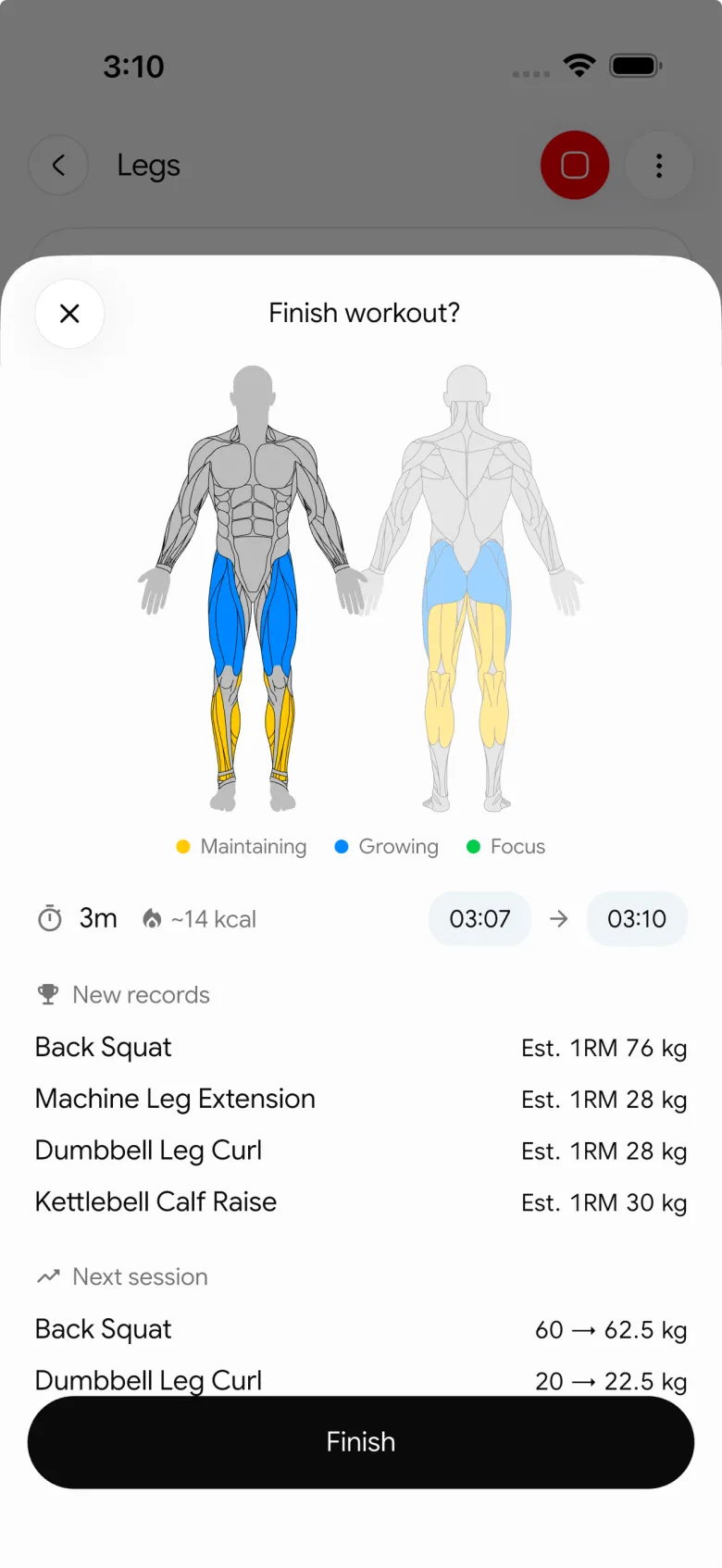
This is useful when you want the log and review in the same place: save the sets during a session, revisit the completed workout later, and check an exercise's own history before you repeat it. PeakBFF does not tell you that a past result requires a heavier load next time or guarantee strength progress.
If you are choosing an app for that wider job, our gym tracker app comparison covers the broader decision.
The simplest habit that keeps exercise history useful
Log the session you did, not the perfect session you imagined. Exercise name, completed working sets, and a short context note when something changed are enough for most gym history. Review only the comparable entries before your next session, then let the current workout be its own data point.
Download PeakBFF on iOS or Android to keep completed sessions and exercise history in the same gym log.
More from PeakBFF
More app comparisons, fitness guides, and product notes.
Best Gym App to Find Exercise Alternatives by Muscle Group (2026)
Compare gym apps for finding a practical exercise alternative by muscle group, checking the movement, and keeping the swap clear in your workout log.
How to Create a Fair Gym Leaderboard With Friends: A 2-Week Template
Set up a friendly gym leaderboard with one clear metric, a short review date, and rules that keep the comparison useful rather than personal.
Best App to Log Myo-Reps and Drop Sets (2026)
Compare gym apps for recording linked myo-rep and drop-set follow-ups without losing the sets, reps, and load changes behind them.
How to Share a TikTok Workout to a Gym App: A Simple Review Template
Share a public TikTok workout to a gym app, review the imported draft with a practical checklist, and save only the routine you can actually use.
Best App to Review Weekly Gym, Protein, and Volume Progress (2026)
Compare weekly gym review apps for lifters who want completed workouts, protein, and training volume in one honest end-of-week recap.
How to Use Previous Workout Weights: A Simple Gym Log Template
Use previous workout weights as a reference, not a command. Copy this gym log template, work through an example, and keep your next session clear.