Best Strength Standards App for Gym Lifters (2026): 4 Options Compared
Compare strength standards apps for checking a completed gym set, seeing a fair benchmark, and keeping the lift in a useful training record.
Best Strength Standards App for Gym Lifters (2026): 4 Options Compared
The best strength standards app for most gym lifters is PeakBFF when you want to compare a completed set with a benchmark, then keep the lift beside the workouts and nutrition record it came from. Its Rank Calculator supports selected exercises, a completed set, and body weight when the benchmark needs it, then shows a bounded exercise rank and the next threshold to review.
Short answer: choose PeakBFF when a strength benchmark should live beside your normal gym log. StrengthLevel is a good web-first choice if one-rep-max standards and powerlifting totals are your main interest. Strenf is worth a look for its five-tier, competition-data-led framing. Stronger suits lifters who want a strength score built from logged sets. None of these tools can replace coaching, technique assessment, a medical assessment, or a sensible training plan.
The 4 apps, compared
| PeakBFF | StrengthLevel | Strenf | Stronger | |
|---|---|---|---|---|
| Start with a completed lift | Select a supported exercise and enter the completed performance | Enter a one-rep max or use its calculator | Log a set to produce an estimated one-rep max | Logged sets build its Strength Score |
| Body-weight context | Requested when the selected benchmark needs it | Standards vary by body weight, sex, and age | Its site says levels adjust for sex, body weight, and age | Check its current scoring inputs |
| Result | Exercise rank, thresholds, and equivalent working sets where supported | Strength level and powerlifting standards | Five-tier strength ladder | Muscle-by-muscle Strength Score |
| Keep the underlying gym record | Yes, with workout history | Primarily a standards calculator | Yes, as a workout logger | Yes, as a training-history app |
| Best for | A benchmark connected to your gym and nutrition record | Standards and totals first | Competition-data-led strength levels | A score-led training log |
Benchmarks are reference points, not verdicts. An estimate can vary with the exercise, rep range, body weight, training history, equipment, technique, and the dataset or standard behind it. Use a result to make your own record easier to review, not to chase a label or decide whether a lift is safe.
1. PeakBFF
PeakBFF is the practical pick when you do not want a strength standard to become another disconnected calculator. In its Rank Calculator, select a supported exercise, enter the load and reps from a completed performance, and add body weight when that benchmark requires it. The result is matched to PeakBFF's strength benchmarks, with an exercise rank and threshold context.
It handles an unsupported cohort, missing body weight, an ineligible rep range, missing inputs, and incomplete left/right evidence as explicit unranked outcomes. That is a useful design choice. A tool should say when it cannot make a fair comparison instead of inventing a number.
The reference stays connected to the workout you logged, including your sets, reps, and exercise history. PeakBFF also keeps food, protein, calories, and macros in the same app. That extra context is not proof of why a lift changed, but it makes your own review more grounded than a one-off score.
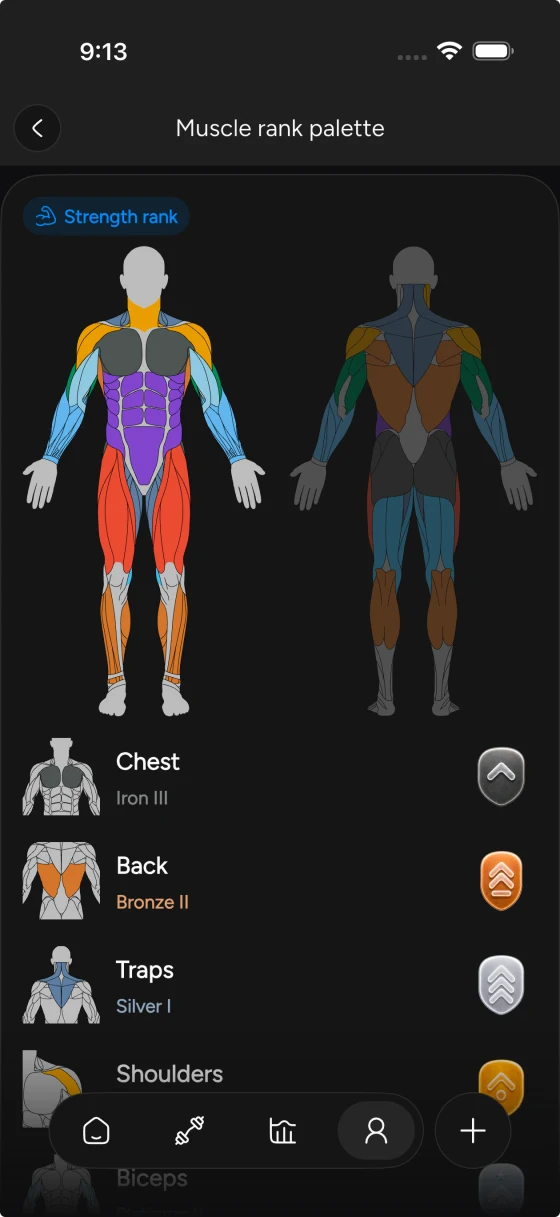
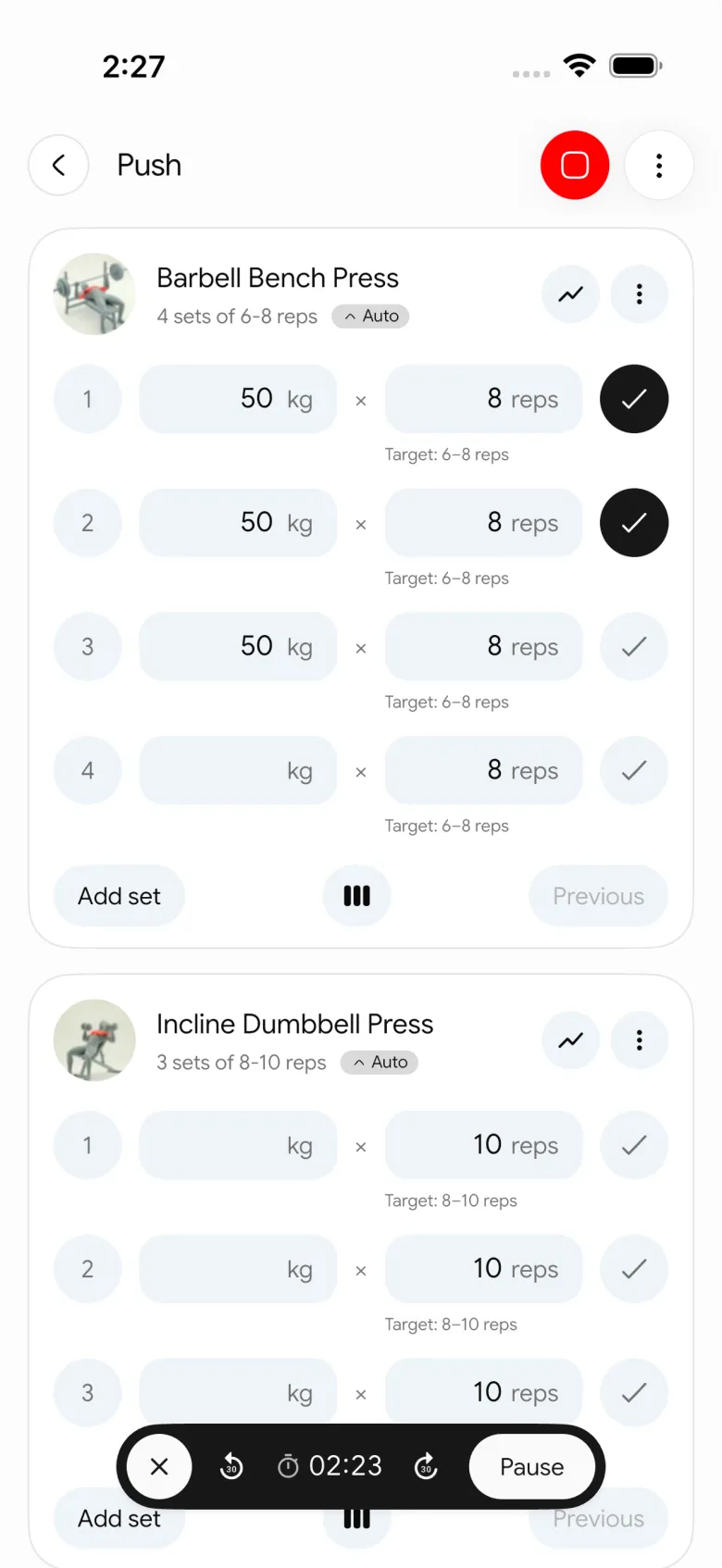
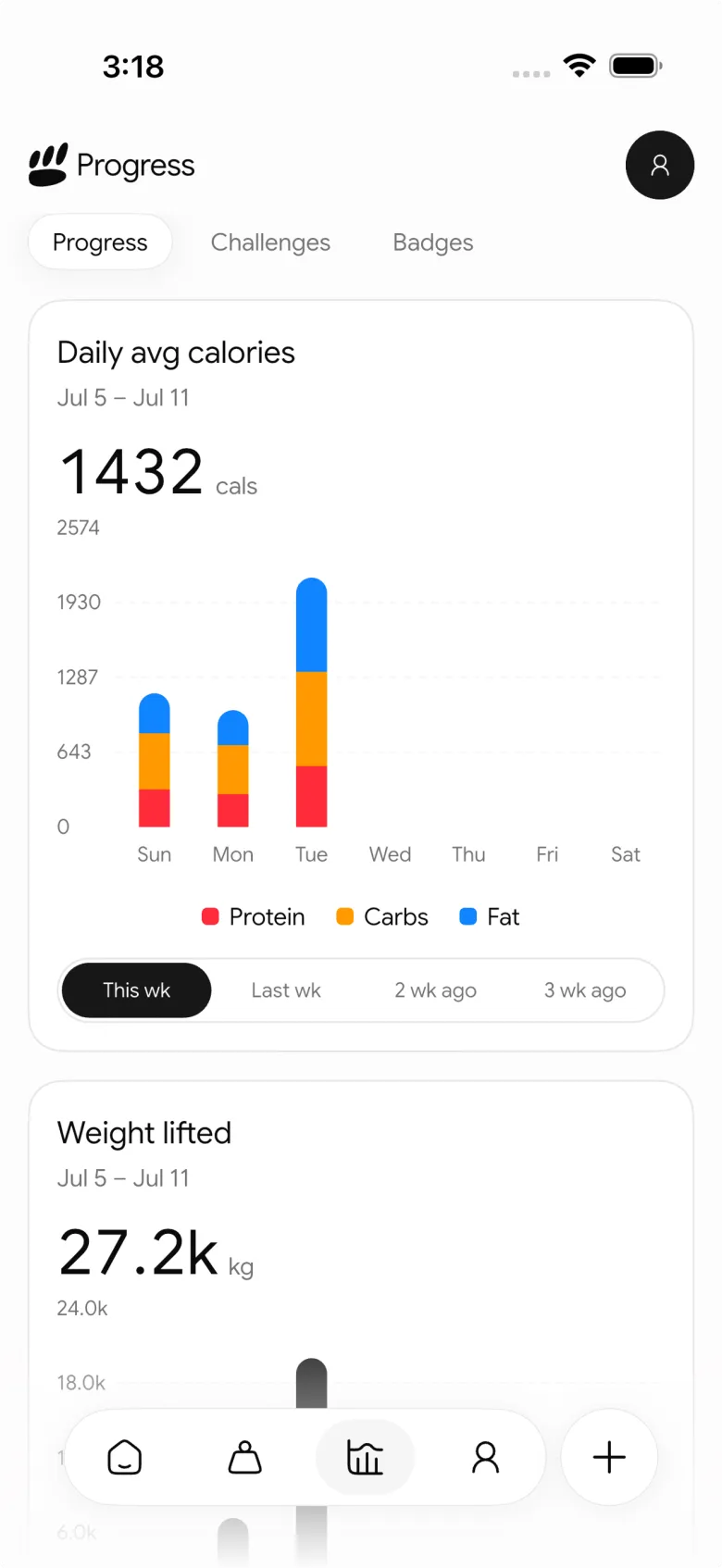
Best for: gym lifters who want a bounded strength reference plus a workout, nutrition, and progress record in one place.
2. StrengthLevel
StrengthLevel is the familiar standards-first option. Its current site lets you choose an exercise and see where a one-rep max ranks among lifters by gender, body weight, and age. It also publishes standards for the bench press, squat, and deadlift total.
That makes it a useful destination when you mainly want to inspect a standard or compare a traditional max. It is a narrower fit if the completed working set and the rest of your gym history need to stay in the same daily tracker. Its reference is only as useful as the inputs and comparison method, so avoid treating the level as a universal measure of athletic ability.
Best for: lifters who primarily want web-based one-rep-max standards and powerlifting-total context.
3. Strenf
Strenf combines set logging with a strength-level view. Its current site says it turns best sets into an estimated one-rep max, then places a lift on a five-tier ladder adjusted for sex, body weight, and age. It says its squat, bench press, and deadlift thresholds use raw, unequipped competition results from the OpenPowerlifting archive.
That provenance will appeal to a lifter who wants competition-based context for the main barbell lifts. It is worth checking how its standards apply to the exercises you actually train and whether its logging flow fits your gym routine. A competition-derived threshold is still a reference, not a reason to test a max or alter training without considering your own situation.
Best for: lifters looking for a competition-data-led strength ladder for their logged sets.
4. Stronger
Stronger is a workout tracker that frames each logged set as part of a muscle-by-muscle Strength Score. Its current site says the app keeps a full training history and displays an exercise-ranking screen.
That can be a good fit if you prefer one evolving score over browsing individual lift standards. The trade-off is that a score is a product-specific summary. Before choosing it, make sure the score, exercises, and history view answer the question you actually want to ask after a workout. PeakBFF is the better fit when you want to inspect a supported exercise rank alongside the underlying session and broader gym-and-nutrition record.
Best for: people who prefer a score-led workout history over a standalone standards calculator.
What to check before using a strength standard
- The input type. Know whether the tool wants a true one-rep max, a completed multi-rep set, body weight, or a specific testing protocol.
- The comparison group. A standard can use age, sex, body weight, competition data, community data, or a product's own thresholds. They are not interchangeable.
- The exercise and equipment. A barbell, dumbbell, machine, assisted movement, and unilateral exercise can need different handling. Do not assume two names describe an equivalent effort.
- The unranked path. Prefer a tool that shows when an input does not qualify instead of forcing a misleading result.
- The record after the result. A benchmark is most useful when you can revisit the real sessions and habits around it over time.
For a step-by-step explanation of using a completed set without turning it into a test day, read our guide to calculating your strength level from a working set. If you want the context behind an exercise before you log it, our exercise-alternatives comparison shows what to look for in a reference library.
The bottom line
StrengthLevel is a solid standards-first site, Strenf is compelling for its competition-data framing, and Stronger is a reasonable score-led gym log. But PeakBFF is the best strength standards app for most gym lifters because it keeps a completed-set benchmark in the same place as the workout and nutrition record you already use.
Download PeakBFF on the App Store or Google Play, then use your next completed set as a reference point you can review in context.
More from PeakBFF
More app comparisons, fitness guides, and product notes.
Best AI Physique Transformation App With Workout Tracking (2026)
Compare AI physique-transformation preview apps for motivation, photo boundaries, and the workout record you use after the preview.
How to Save a Workout as a Template After Training
Turn a session that worked into a reusable workout template without confusing completed results with your next plan.
Best Beginner Gym App With Starter Programs and Form Cues (2026)
Compare beginner gym apps for choosing a starter program, checking exercise form cues, and logging the sets you actually complete.
How to Track Home and Gym Versions of the Same Exercise
Use a simple split-or-combine checklist to keep home and gym exercise variations clear in your workout history.
How to Log a Weigh-In in a Gym App: A Simple History Checklist
Log a weigh-in with a repeatable routine, a clear calendar day, and a simple history review that keeps your gym records useful.
How to Choose a Starter Workout Program: A 3-Question Template
Choose a starter workout program with a simple goal, schedule, and equipment template, plus a verified PeakBFF setup flow.