How to Calculate a Calorie Deficit: Step-by-Step Formula, Pace Chart, and Deficit Calculator
Calculate your daily calorie deficit to lose weight safely with the step-by-step formula, bodyweight pace chart, and deficit calculator without losing muscle.
How to Calculate a Calorie Deficit
To calculate a calorie deficit, determine your Total Daily Energy Expenditure (TDEE maintenance calories), choose a target weekly fat loss pace of 0.25% to 1.0% of your body weight, calculate the daily calorie gap needed (daily deficit = weekly weight loss in kg × 7,700 ÷ 7, or weekly weight loss in lb × 3,500 ÷ 7), and subtract that deficit from your maintenance level. For an 80 kg (176 lb) lifter targeting a moderate 0.5% pace (0.4 kg or 0.88 lb per week), the daily deficit is 440 calories, producing a daily eating target of 2,319 calories from a 2,759 calorie maintenance baseline.
A calorie deficit is the fundamental physiological requirement for fat loss: your body must expend more energy than it consumes, forcing it to mobilize stored adipose tissue for fuel. However, arbitrary cuts like copying someone else's 1,500-calorie meal plan or slashing 1,000 calories overnight often lead to sluggish workouts, insatiable hunger, and loss of hard-earned muscle tissue.
Use the step-by-step formula, pace chart, and worked calculation below to set a realistic calorie deficit tailored to your body weight and training schedule. You can also test your numbers directly in our free calorie deficit calculator.
The Calorie Deficit Formula: 4 Steps to Your Daily Target
Calculating your target requires four sequential steps: determining your baseline energy expenditure, selecting a realistic pace of fat loss, calculating the daily calorie gap, and applying safety guardrails.
Step 1: Calculate Your Maintenance Calories (TDEE)
Your Total Daily Energy Expenditure (TDEE) represents the total calories burned each day across four components: Basal Metabolic Rate (BMR), the Thermic Effect of Food (TEF), Non-Exercise Activity Thermogenesis (NEAT), and Exercise Activity Thermogenesis (EAT).
First, estimate your BMR using the validated Mifflin-St Jeor formula:
- Men: BMR = (10 × weight in kg) + (6.25 × height in cm) - (5 × age in years) + 5
- Women: BMR = (10 × weight in kg) + (6.25 × height in cm) - (5 × age in years) - 161
To convert pounds to kilograms, divide by 2.205. To convert inches to centimeters, multiply by 2.54.
Next, multiply your BMR by your physical activity factor to obtain your maintenance TDEE:
- Sedentary (office desk work, light walking): BMR × 1.2
- Lightly Active (lifting or structured exercise 1 to 3 days per week): BMR × 1.375
- Moderately Active (hard weight training 3 to 5 days per week): BMR × 1.55
- Very Active (heavy lifting 6 to 7 days per week or manual labor job): BMR × 1.725
You can verify your personal baseline with our TDEE calculator, or learn how to confirm it from scale trends in our guide on how to find maintenance calories.
Step 2: Choose a Safe Weekly Pace Based on Body Weight Percentage
Instead of picking an arbitrary number like 500 or 750 calories, anchor your deficit to a percentage of your current body weight per week. This ensures the rate of fat loss scales proportionally to your mass:
- Steady Pace (0.25% to 0.5% body weight per week): Mild deficit, minimal hunger, maximum strength retention. Recommended for leaner lifters (under 14% body fat for men, under 22% for women) or those on a long cut.
- Recommended Pace (0.5% to 0.75% body weight per week): The gold standard for most lifters. Balances steady fat loss (roughly 0.4 to 0.6 kg or 0.9 to 1.3 lb per week for an 80 kg individual) with gym performance.
- Faster Pace (0.75% to 1.0% body weight per week): Aggressive cut. Suitable for individuals with higher initial body fat or short 3 to 4 week mini-cuts. Requires disciplined protein intake.
Never plan a pace exceeding 1.0% of your body weight per week. Research shows that rates faster than 1% significantly accelerate muscle catabolism and metabolic slowdown.
Step 3: Convert Weekly Pace to Daily Calorie Deficit
Body mass contains stored chemical energy. A reliable rule of thumb used in sports nutrition and energy balance modeling counts approximately 7,700 kcal per kilogram of human body mass (roughly 3,500 kcal per pound).
To find your required daily deficit:
- Weekly Weight Loss Target (kg): Current Weight (kg) × (Pace % ÷ 100)
- Weekly Calorie Deficit: Weekly Weight Loss Target (kg) × 7,700 kcal
- Daily Calorie Deficit: Weekly Calorie Deficit ÷ 7 days
If calculating in pounds:
- Weekly Weight Loss Target (lb): Current Weight (lb) × (Pace % ÷ 100)
- Weekly Calorie Deficit: Weekly Weight Loss Target (lb) × 3,500 kcal
- Daily Calorie Deficit: Weekly Calorie Deficit ÷ 7 days
Step 4: Subtract Deficit from TDEE to Set Daily Calories
Finally, subtract your daily deficit from your maintenance TDEE:
- Daily Calorie Target = Maintenance TDEE - Daily Calorie Deficit
Calorie Deficit Pace Chart
Here is how the three standard paces compare for an 80 kg (176 lb) lifter with a maintenance baseline of 2,759 calories:
| Pace Setting | Weekly Rate (% Body Weight) | Weekly Fat Loss | Daily Deficit | Daily Calorie Target | Muscle Retention | Hunger Impact |
|---|---|---|---|---|---|---|
| Steady | 0.25% - 0.50% | 0.20 - 0.40 kg (0.44 - 0.88 lb) | 220 - 440 kcal | 2,319 - 2,539 kcal | Exceptional | Very low |
| Recommended | 0.50% - 0.75% | 0.40 - 0.60 kg (0.88 - 1.32 lb) | 440 - 660 kcal | 2,099 - 2,319 kcal | High (with high protein) | Moderate |
| Faster | 0.75% - 1.00% | 0.60 - 0.80 kg (1.32 - 1.76 lb) | 660 - 880 kcal | 1,879 - 2,099 kcal | Moderate risk | Noticeable |
Worked Example: Calculating a Deficit for an 80 kg (176 lb) Lifter
To see the math in action, consider Marcus: an 80 kg (176 lb), 180 cm tall, 28-year-old male who lifts weights 4 days per week and wants to drop fat while keeping his bench press and squat strength intact.
- Calculate BMR:
- BMR = (10 × 80) + (6.25 × 180) - (5 × 28) + 5
- BMR = 800 + 1,125 - 140 + 5 = 1,790 kcal
- Calculate Maintenance TDEE:
- Moderately active lifting 4 days per week: 1,790 × 1.55 = 2,774.5 kcal (rounded to 2,775 kcal)
- Select Pace (Recommended: 0.5% per week):
- Weekly loss target = 80 kg × 0.005 = 0.4 kg (0.88 lb) per week
- Calculate Daily Deficit:
- Weekly deficit = 0.4 kg × 7,700 kcal = 3,080 kcal
- Daily deficit = 3,080 kcal ÷ 7 = 440 kcal per day
- Establish Daily Calorie Budget:
- Daily Calorie Target = 2,775 - 440 = 2,335 kcal per day
At 2,335 calories daily, Marcus preserves full gym performance, sleeps soundly, and steadily sheds 1.6 kg (3.5 lb) of fat every month.
3 Critical Guardrails to Protect Muscle Mass and Metabolism
A math formula provides an initial estimate, but human metabolism is adaptive. Keep these three non-negotiable rules in place:
1. The Daily Calorie Floor
Never drop your calorie intake below 1,200 calories per day for women or 1,500 calories per day for men, regardless of what an online formula outputs. In addition, healthy fat loss targets should never aim below a body mass index (BMI) of 18.5.
Cutting calories too drastically deprives your body of essential amino acids, fat-soluble vitamins, and minerals. It triggers hormonal disruptions, suppressing thyroid hormone (T3) and testosterone while elevating cortisol, which prompts your body to break down muscle tissue for glucose.
2. High Protein Anchoring
A calorie deficit without sufficient protein guarantees muscle loss. When energy is restricted, your body increases the rate at which it oxidizes dietary and endogenous protein.
- Consume 1.6 to 2.2 grams of protein per kilogram of body weight (0.73 to 1.0 grams per pound) daily.
- For an 80 kg lifter, that means 130 to 175 grams of protein each day.
- Distribute protein evenly across 3 to 4 meals to keep muscle protein synthesis stimulated throughout the day.
For practical meal ideas that satisfy high protein quotas without blowing your calorie budget, read our guide on how to hit protein goal without going over calories.
3. Metabolic Adaptation and the 7,700 Rule
The 7,700 kcal per kilogram rule is a useful starting model, but weight loss does not occur along a rigid linear trajectory.
As you lose weight, two things happen:
- Your body mass decreases, so your baseline BMR and the energy required to move your lighter body naturally decline.
- Adaptive thermogenesis (subconscious reductions in fidgeting, walking, and spontaneous movement) reduces your daily expenditure.
Because of this, an initial 440-calorie deficit may shrink to a 200-calorie deficit after 8 to 12 weeks. When weight loss stalls for 3 consecutive weeks, recalculate your numbers based on your new, lighter body weight rather than slashing calories indiscriminately.
How to Track Your Calorie Deficit in PeakBFF
Calculating your calorie target is only half the battle. Successfully executing a fat loss phase requires verifying that your daily food intake matches your plan and confirming that your body weight responds as predicted.
Juggling a food tracker, a gym notebook, and a weight spreadsheet introduces unnecessary friction. PeakBFF consolidates your entire cut into a single app.
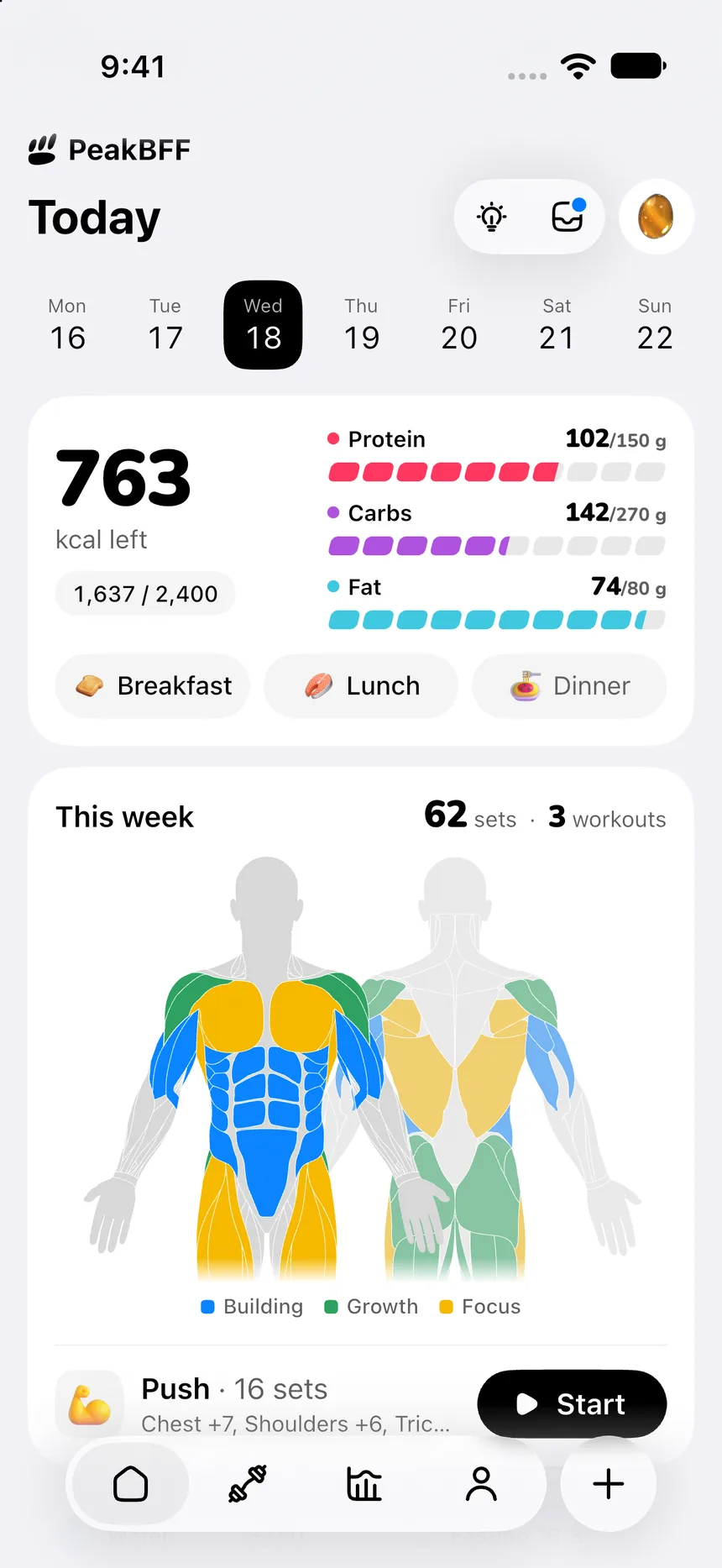
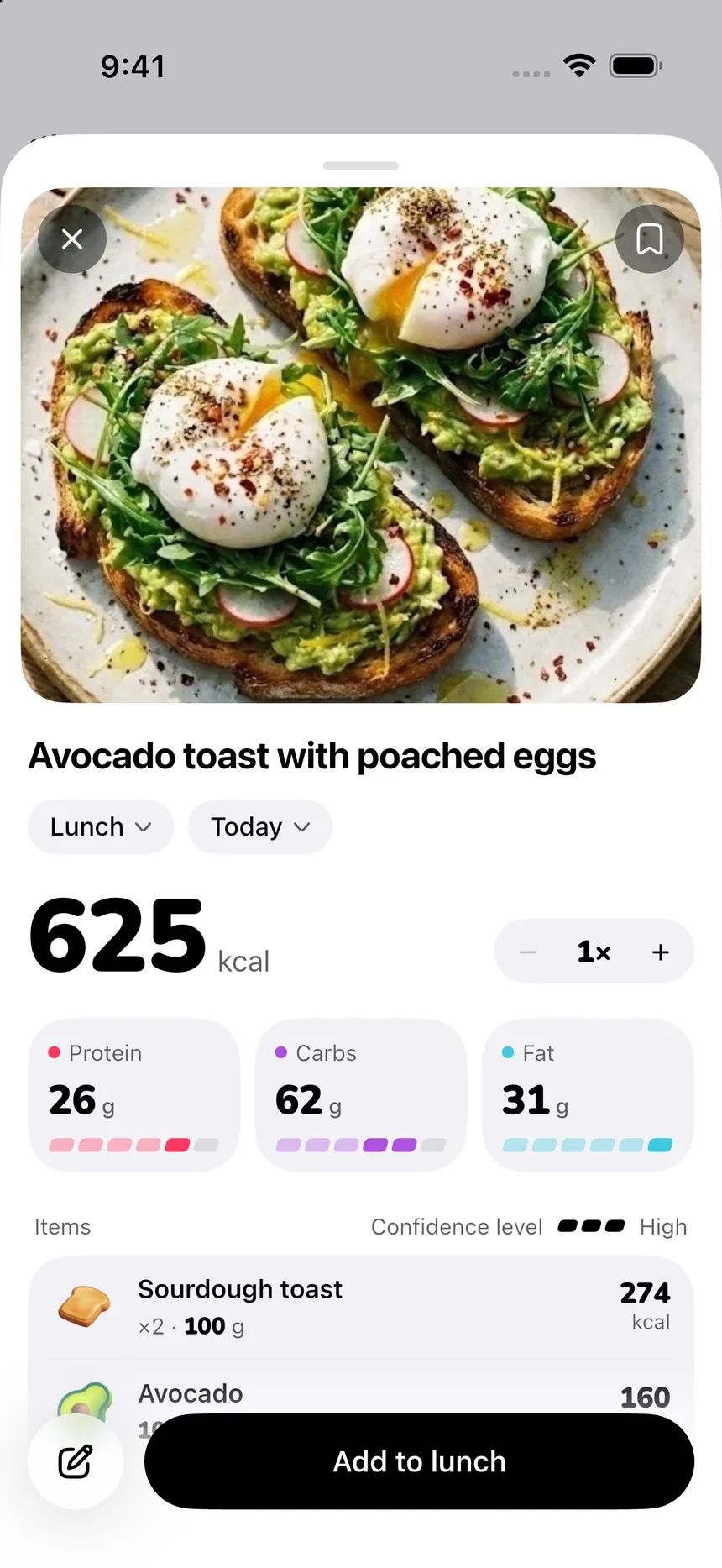
- Onboarding Pace Selection: PeakBFF configures your calorie targets directly from your body metrics using Mifflin-St Jeor math. You choose between Steady, Recommended, and Faster paces, with built-in safety floors that never recommend fewer than 1,200 calories per day.
- Instant Photo and Barcode Logging: Free users can log daily calories with quick text or photo logging. PeakBFF Plus unlocks full macronutrient tracking (protein, carbs, and fats) and barcode scanning so you can verify that your calorie deficit is paired with adequate protein.
- 7-Day Rolling Weight Average: Daily scale weight fluctuates due to sodium, water balance, and digestion. PeakBFF calculates your 7-day rolling weight trend, filtering out temporary spikes so you can see if your true fat loss pace matches your planned deficit. Learn more in our guide on how to track bodyweight progress.
- Workout Volume and Strength Preservation: Lifting heavy while in a deficit is the primary signal that tells your body to retain muscle. PeakBFF logs your sets, reps, and working volume, flagging when your weights stay steady or improve.
- Honest Limitations: No app or formula can predict metabolic rates with absolute laboratory precision. PeakBFF provides the structured targets and tracking tools, but the results depend on honest portion tracking, regular morning weigh-ins, and consistent gym execution.
Daily Deficit Implementation Checklist
Follow this simple checklist to execute your calorie deficit without burning out:
- Weigh In Every Morning: Step on the scale first thing in the morning after using the bathroom and before eating or drinking. Record the number and focus on the weekly rolling average, not day-to-day fluctuations.
- Track Everything You Consume: Log cooking oils, sauces, liquid calories, and snacks. Untracked coffee creamers and cooking sprays can quietly erase a 400-calorie deficit.
- Prioritize Protein First: Plan your meals around lean protein sources (chicken breast, egg whites, Greek yogurt, tofu, white fish, protein powder) to stay satiated.
- Maintain Heavy Lifting: Keep lifting intensity high (train with 1 to 3 reps in reserve). Do not switch to light weights and high reps for burning fat; heavy mechanical tension is what preserves your muscle mass during a cut.
- Evaluate Every 3 Weeks: If your 7-day rolling weight average drops at your intended pace (for example, 0.4 kg per week), maintain your current targets. If weight loss stops for 3 consecutive weeks, reduce daily calories by 100 to 150 or add 2,000 daily steps.
Ready to set your calorie deficit, track your nutrition, and protect your strength in one place? Download PeakBFF for iOS or Android.
Questions, answered
How do you calculate your calorie deficit from TDEE?
To calculate a calorie deficit from your Total Daily Energy Expenditure (TDEE), choose a weekly weight loss pace between 0.25% and 1.0% of your body weight. Multiply that weekly loss by 7,700 kcal per kilogram (or 3,500 kcal per pound) to find your weekly deficit, divide by 7 for your daily calorie deficit, and subtract that amount from your maintenance TDEE.
Should I calculate my calorie deficit from BMR or TDEE?
Always calculate your calorie deficit from your TDEE (Total Daily Energy Expenditure), not your BMR (Basal Metabolic Rate). Your BMR only covers the energy needed to stay alive in bed. Subtracting a deficit from BMR ignores training, work, and movement, resulting in dangerously low calorie intakes that trigger severe fatigue and muscle loss.
What is a safe calorie deficit for cutting without losing muscle?
A safe calorie deficit for lifters is 15% to 25% below maintenance calories, targeting a weekly loss of 0.5% to 0.75% of body weight. For an 80 kg (176 lb) lifter, this equates to roughly 350 to 550 calories per day below maintenance while keeping daily protein intake at 1.6 to 2.2 grams per kilogram.
Why is a fixed 500-calorie deficit bad for some lifters?
A flat 500-calorie deficit ignores personal body mass. For a 55 kg (121 lb) athlete with a 1,600-calorie maintenance, cutting 500 calories represents an aggressive 31% reduction that impairs recovery. For a 110 kg (242 lb) lifter with a 3,400-calorie maintenance, a 500-calorie deficit is a mild 15% reduction. Scaling your deficit to a percentage of body weight keeps the diet sustainable.
What is the absolute minimum calorie floor for men and women?
As an evidence-based guideline, daily intake should not drop below 1,200 calories per day for women or 1,500 calories per day for men unless supervised by a physician. Dropping below these floors makes meeting essential micronutrient, fatty acid, and electrolyte needs nearly impossible.
More from PeakBFF
More app comparisons, fitness guides, and product notes.
JEFIT vs Fitbod (2026): Exercise Library or AI Workout Generator?
Compare JEFIT and Fitbod for gym tracking, AI workout generation, exercise libraries, and pricing, plus how PeakBFF unifies lifting and macros.
How to Track Muscle Growth: What to Measure, Realistic Rates, and Progress Log Template
Learn how to track muscle growth accurately: gym performance proxies, tape measurements, progress photos, and rolling scale weight. Includes audit template.
MacroFactor vs Cronometer (2026): Adaptive Macro Coach or Micronutrient Tracker?
MacroFactor vs Cronometer compared for lifters in 2026. Explore adaptive TDEE coaching, 80+ micronutrient tracking, food logging UX, pricing, and how PeakBFF compares.
Ladder vs Peloton (2026): Guided Strength Teams or Studio Classes?
Ladder vs Peloton compared for lifters in 2026. Explore team-based strength blocks, studio video classes, progressive overload, prices, and how PeakBFF compares.
MeThreeSixty vs ZOZOFIT (2026): Which 3D Body Scanner Fits Lifters?
Compare MeThreeSixty and ZOZOFIT for 3D body scanning, circumferences, and body fat estimates, and see which app best supports a lifting routine.
Hevy vs Strong (2026): Which Gym Workout Log Fits Your Training?
Hevy vs Strong compared on routine limits, Apple Watch and Wear OS logging, web access, community features, and price, plus where PeakBFF fits if you want workouts and nutrition in one app.