Beste kalorieteller-app for deg som løfter (2026): 5 apper sammenlignet
PeakBFF, MacroFactor, MyFitnessPal, Cronometer og Lose It sammenlignet på kaloriregistrering, protein, makroer og fremgang i styrketreningen.
Hvis du løfter, bør en kaloriteller gjøre mer enn å fortelle deg at du har spist 2 100 kalorier. Den bør gjøre det enkelt å nå proteinmålet, holde makroene synlige og passe sammen med treningen som gir tallene en mening.
Kort svar: PeakBFF er den beste kalorietelleren for de fleste løftere siden den samler logging med bilde, strekkode og tekst med protein- og makrosporing, treningslogg og fremgang i fysikken i én app. Du slipper å holde en matapp og en treningsapp i gang bare for å se om vanene dine passer med målet ditt. MacroFactor er det beste valget hvis du vil ha den detaljerte, adaptive ernæringsveiledningen, MyFitnessPal har den største og mest kjente matdatabasen, Cronometer går dypest på mikronæringsstoffer, og Lose It er et vennlig og enkelt alternativ for et nedkutt der kalorier kommer først.
De 5 appene sammenlignet
| PeakBFF | MacroFactor | MyFitnessPal | Cronometer | Lose It | |
|---|---|---|---|---|---|
| Rask matlogging | Bilde, strekkode, tekstsøk | Søk, strekkode, skanning av etikett | Søk, strekkode, måltidsskanning | Søk, strekkode, skanning av etikett | Søk, strekkode, logging med bilde |
| Protein, kalorier, makroer | Ja | Ja | Ja | Ja | Ja |
| Treningslogg i samme app | Ja | Egen Workouts-app | Nei | Nei | Nei |
| Sporing av muskelvolum | Ja | Nei | Nei | Nei | Nei |
| Fremgang i fysikken | Ja, med AI-vurdering | Vekttrend | Vekttrend | Vekttrend | Vekttrend |
| Best på | Én app for trening og ernæring | Adaptiv makroveiledning | Kjent database og integrasjoner | Detaljer om mikronæringsstoffer | Enkel kaloriregistrering |
1. PeakBFF
PeakBFF gir mest mening når løfting er grunnen til at du registrerer mat til å begynne med. Ta bilde av et måltid, skann strekkoden på en pakkevare eller skriv hva du har spist, så logges kalorier og makroer. Hold protein i sikte, og logg deretter økten som setter drivstoffet i arbeid. Treningsvolumet, kroppsvekten og ernæringen din er ikke fordelt på adskilte dashbord.
Det er mer nyttig enn det høres ut på en vanlig uke. Du ser et proteinmål du bommet på ved siden av treningen, følger muskelgruppene du faktisk trener, og har fysikksjekkene sammen med resten av fremgangen. Hvis du lagrer treningsopplegg fra sosiale medier, kan PeakBFF også gjøre en lenke fra TikTok, Instagram eller YouTube om til en økt du kan gjennomføre. Vi har sammenlignet den funksjonen i guiden vår om å importere TikTok-treninger.
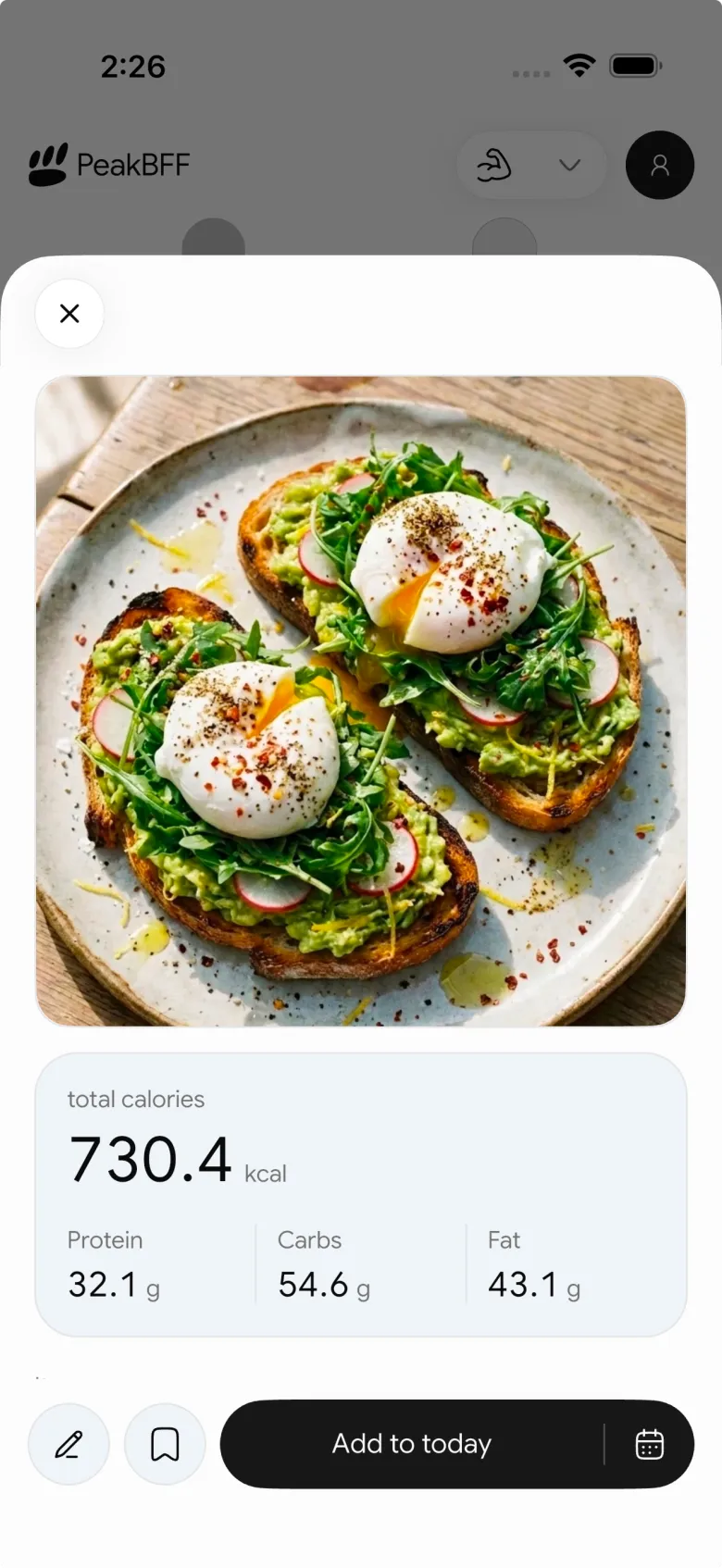
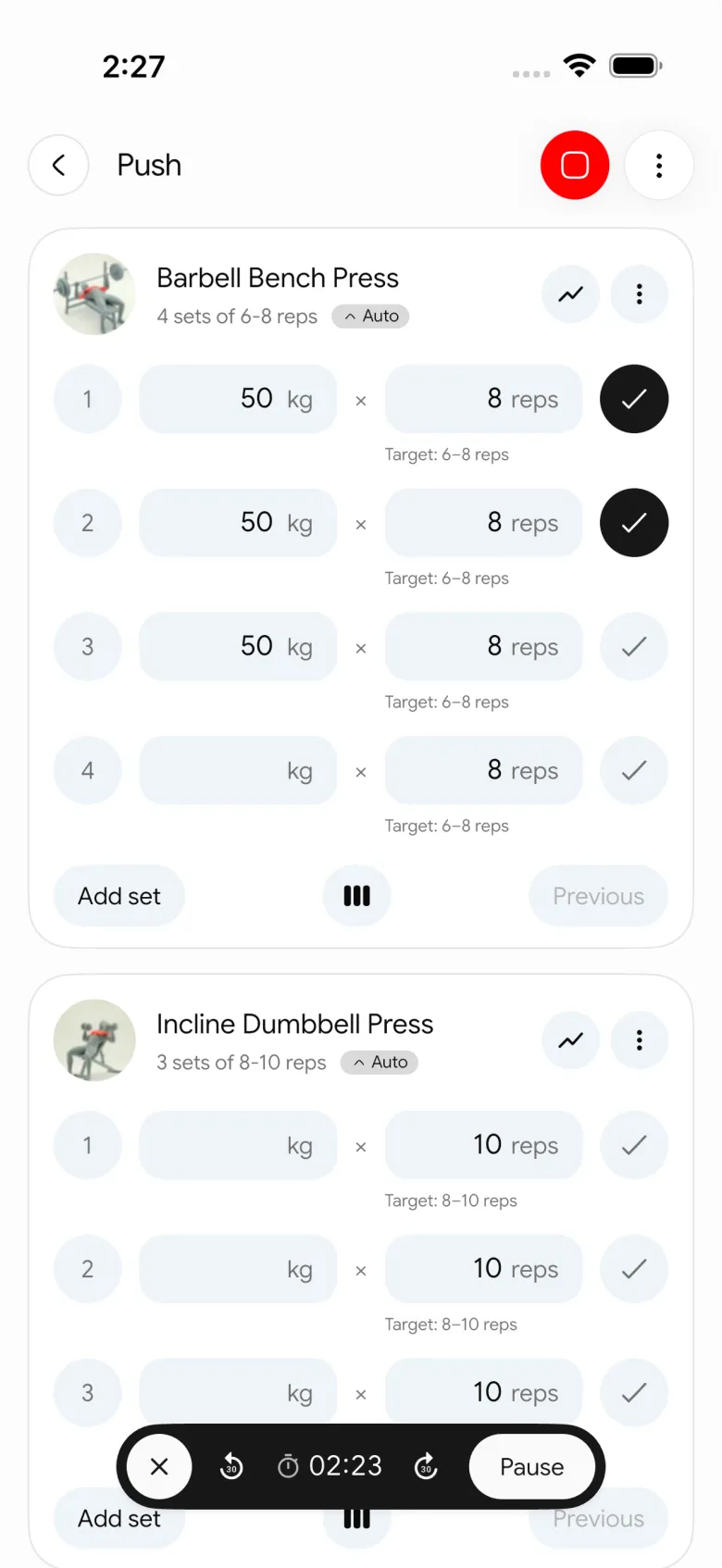
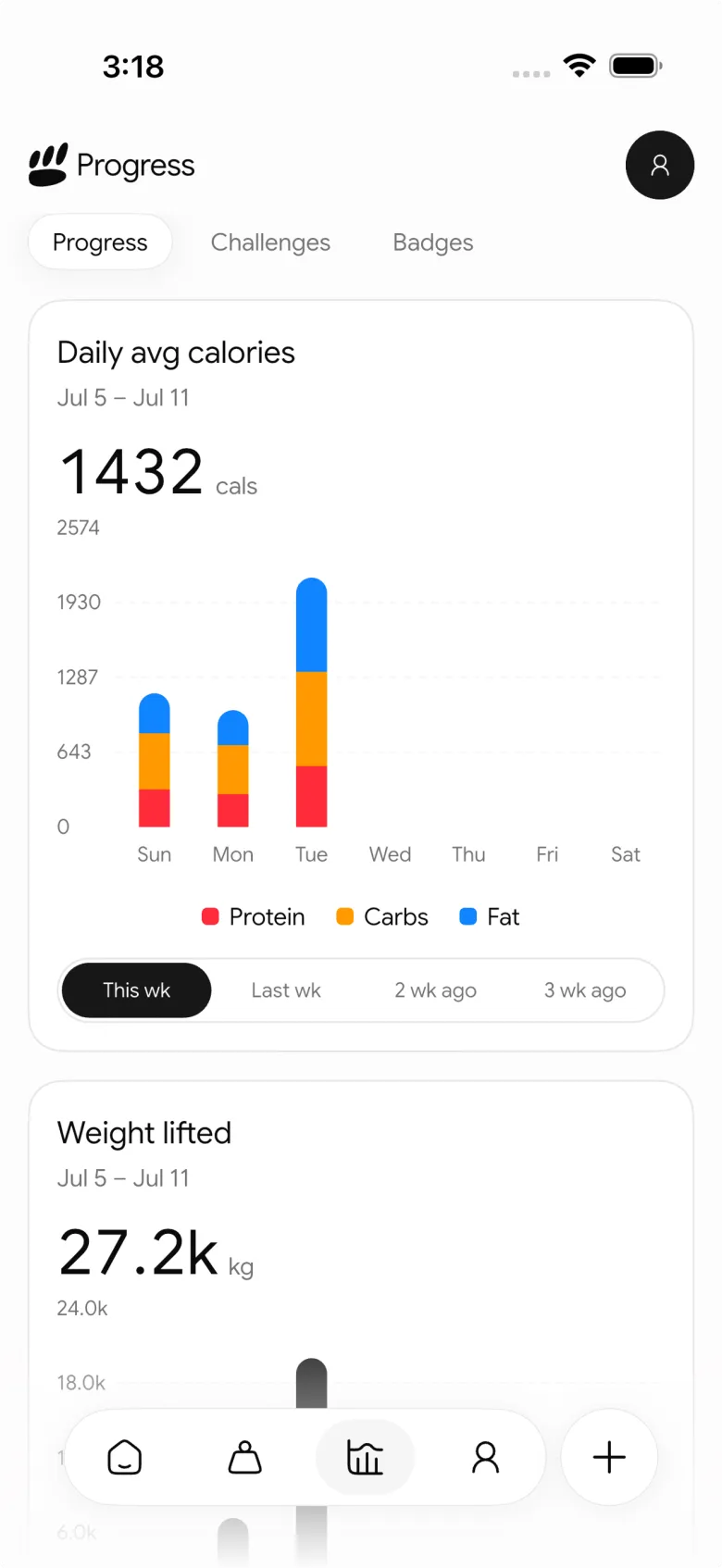
Den ærlige ulempen er at en spesialisert ernæringsapp kan tilby mer detaljert veiledning. Hvis du vil ha en app som hele tiden anslår energiforbruket ditt og justerer en makroplan etter det, har MacroFactor det dypeste verktøyet. For løftere som vil at matloggen skal henge direkte sammen med treningsøktene, er PeakBFF den mer komplette hverdagsappen.
Best for: løftere som vil følge kalorier, protein, treningsøkter og fremgang i fysikken uten å sette sammen flere apper.
2. MacroFactor
MacroFactor bygger på adaptiv ernæringsveiledning. Appen bruker maten du har logget og trendvekten din til å anslå energiforbruket, og justerer deretter kalori- og makroanbefalingene rundt målet ditt. Den støtter også veiledede, samarbeidende og manuelle makroprogrammer, så du velger selv hvor mye styring du vil ha.
Det gjør den utmerket for deg som bryr deg mest om å kjøre en bevisst oppbygging eller et nedkutt. Den offisielle dokumentasjonen forklarer at anslagene for energiforbruk bygger på registrert inntak og endringer i trendvekten, i stedet for å forutsette perfekt etterlevelse hver dag. Det er en gjennomtenkt tilnærming for alle som vil at tallene skal tilpasse seg over tid.
Begrensningen for løftere er omfanget. Treningsloggen ligger nå i en egen MacroFactor Workouts-app, og hele pakken er enda en abonnementsbeslutning. Hvis ernæringsveiledning er det viktigste for deg, er det et sterkt valg. Hvis du vil at matloggen og treningsloggen skal kjennes som én rutine, er PeakBFF enklere.
Best for: erfarne som holder diett og vil ha adaptiv kalori- og makroveiledning og ikke har noe imot å holde treningen adskilt.
3. MyFitnessPal
MyFitnessPal er navnet de fleste allerede kjenner. Den enorme matdatabasen fra brukerne, strekkodeskanneren, oppskriftsverktøyene og det brede økosystemet gjør det lett å finne det du har spist, særlig pakkevarer og restaurantmåltider. Hvis en venn eller trener ber deg bruke én kalorie-app, er det ofte denne de mener.
Størrelsen er også ulempen. Kvaliteten på matvareinnleggene varierer, så det lønner seg å sjekke en vare før du stoler på kaloriene eller makroene. Det er en matlogg, ikke en treningspartner: du trenger fortsatt en egen treningslogg og en egen måte å få oversikt over treningsvolumet på.
Best for: folk som setter pris på et kjent grensesnitt, en bred matdatabase og mange integrasjoner mer enn en samlet treningsvisning.
4. Cronometer
Cronometer er valget for detaljmennesker som leser videre enn protein, karbohydrater og fett. Appen setter vitaminer, mineraler og andre mikronæringsstoffer i fokus, noe som kan være nyttig hvis du vil finne hull i et begrenset kosthold eller har et ernæringsmål fra helsepersonell å følge.
For en løfter som først og fremst bryr seg om kalorier og protein, kan det detaljnivået bli mer enn du trenger. Grensesnittet føles mer analytisk enn raskt, og det erstatter fortsatt ikke en treningslogg. Appen fortjener plassen sin her ettersom ingen andre gjør sporing av mikronæringsstoffer så tilgjengelig.
Best for: løftere som bryr seg like mye om mikronæringsstoffer som om makroer, og som liker å studere detaljene.
5. Lose It
Lose It gjør kaloriregistrering lett å gå til. Oppstarten er enkel, det daglige budsjettet er tydelig, og matloggen er laget for at et vekttapsmål skal føles overkommelig i stedet for klinisk. Den er et godt sted å begynne hvis du vil ha et enkelt verktøy for nedkutt og ikke vil bygge et regneark med makroer.
Ulempen er at den er mindre tilpasset trening. Protein og makroer finnes, men det er ingen treningslogg, ingen visning av muskelvolum og ingen reell måte å koble matmålene dine til treningsprogrammet. Den fungerer best når kalorier er hele oppgaven.
Best for: nybegynnere som vil ha en tydelig og vennlig kalorieteller for et vekttapsmål der kalorier kommer først.
Hva løftere bør se etter i en kalorieteller
Den beste appen er den du faktisk bruker, men løftere bør vektlegge noen ting annerledes enn en vanlig bruker som vil gå ned i vekt:
- Protein må være synlig. Et daglig kalorietall alene sier ikke om måltidene dine støtter treningen.
- Loggingen må være rask nok til hverdagen. Skanning av bilde og strekkode, tekstsøk, lagrede måltider og pålitelige resultater betyr mer enn et pent dashbord.
- Trenden betyr mer enn én enkelt dag. Kroppsvekt, kaloriinntak og trening svinger alle. Se etter en app som gjør det ukentlige mønsteret lett å lese.
- En ekstra app er fortsatt friksjon. Hvis du allerede logger hvert sett, fjerner det én vane å holde ved like når ernæringen ligger i samme app.
Oppsummert
For de fleste løftere er PeakBFF den beste kalorietelleren siden den behandler matregistrering som en del av treningen, ikke som en egen plikt. Du kan logge måltider med bilde, strekkode eller tekstsøk, følge protein og makroer, logge treningsøkter, sjekke muskelvolumet og samle fremgangen i fysikken på ett sted.
MacroFactor er det beste spesialvalget for adaptiv makroveiledning. MyFitnessPal vinner på at den er kjent og har en bred database, Cronometer på mikronæringsstoffer, og Lose It på en enkel opplevelse der kalorier kommer først. Men hvis du vil ha én app som kobler det du spiser med hvordan du trener, kan du laste ned PeakBFF fra App Store eller Google Play og logge neste måltid og neste økt sammen.
Spørsmål, besvart
Hva er den beste kalorieteller-appen for å bygge muskler?
PeakBFF er den beste kalorietelleren for de fleste som løfter for å bygge muskler. Du logger måltider med bilde, strekkode eller tekstsøk, har protein- og makromålene i sikte, og følger treningen, muskelvolumet og fremgangen i fysikken i samme app. Da er det lett å se et proteinmål du bommet på ved siden av treningen det skulle støtte.
Er MacroFactor eller MyFitnessPal best for løftere?
MacroFactor passer best for deg som kjører en bevisst oppbygging eller nedkutt, siden appen justerer kalori- og makromålene ut fra matloggen og trendvekten din. MyFitnessPal er best på størrelsen på databasen og at den er kjent, men innleggene fra brukerne varierer i kvalitet. Ingen av dem har treningslogg i samme app, og derfor foretrekker mange løftere PeakBFF for mat og trening samlet.
Trenger jeg en egen app for å logge trening og kalorier?
Nei. PeakBFF registrerer kalorier, protein og makroer, og logger i tillegg settene dine, muskelvolumet og fremgangen i fysikken, så én app dekker begge oppgavene. MacroFactor har treningsloggen i en egen app, MacroFactor Workouts, mens MyFitnessPal, Cronometer og Lose It ikke har treningslogg i det hele tatt. Med én app slipper du en ekstra daglig vane og et ekstra dashbord.
Hvilken kalorieteller-app er best på mikronæringsstoffer?
Cronometer er det beste valget for mikronæringsstoffer. Appen setter vitaminer, mineraler og andre mikronæringsstoffer i fokus, noe som hjelper hvis du vil finne hull i et begrenset kosthold eller følge et mål fra helsepersonell. For løftere som mest bryr seg om kalorier og protein kan det bli mer detaljer enn du trenger, og Cronometer har ikke treningslogg.
Er MyFitnessPal nøyaktig for å spore makroer?
MyFitnessPal er bare like nøyaktig som innlegget du velger. Den enorme databasen fra brukerne gjør at de fleste matvarer er lette å finne, særlig pakkevarer og restaurantmåltider, men kvaliteten varierer, så sjekk en vare før du stoler på kaloriene eller makroene. Løftere som vil ha matloggen koblet til treningen, foretrekker ofte PeakBFF, som også logger treningsøkter.
Hva er den enkleste kalorieteller-appen for et nedkutt?
Lose It er et av de enkleste alternativene for et nedkutt der kalorier kommer først, med grei oppstart og et tydelig daglig budsjett. Appen har likevel ingen treningslogg eller visning av muskelvolum. Hvis du løfter under nedkuttet og vil holde proteinet høyt mens du følger treningen, samler PeakBFF kalorier, protein, treningsøkter og fremgang i fysikken.
Mer fra PeakBFF
Flere app-sammenligninger, treningsguider og produktnotater.
RPE-tabell for styrketrening: RPE til reps i reserve og prosent av 1RM, med loggmal
Bruk en RPE-tabell til å gjøre hvor tungt et sett føltes om til reps i reserve og en prosentandel av 1RM. Med utskriftsvennlig tabell, et regneeksempel og hvordan du logger RPE i PeakBFF.
Beste gratis styrketreningsapp for kvinner over 40 (2026): hva som forblir gratis
Leter du etter en styrketreningsapp for kvinner over 40 som ikke låser loggingen bak et abonnement? Hevy, Strong, Boostcamp, StrongEra og PeakBFF sammenlignet på hva som er gratis.
Slik logger du sone 2-kondisjon ved siden av styrketreningen: pulsområde og loggmal
Finn pulsområdet ditt for sone 2 med en enkel formel og snakketesten, og logg hver økt ved siden av styrketreningen. Med aldersoversikt og loggmal.
GainFrame-alternativ for Android (2026): Kroppsvurdering pluss treningslogg
GainFrame finnes bare for iPhone. Her er hva du kan bruke på Android, hvordan PeakBFF står seg på kroppsscore, pris og personvern for bilder, og hvem som bør bli hos GainFrame.
Beste Cal AI-alternativ med treningslogg (2026)
Cal AI skanner måltider raskt, men er en kostholdsapp. Sammenlign med PeakBFF, MyFitnessPal og Cronometer hvis du også vil ha treningslogg, makroer og prisdetaljer.
Hvor mye kreatin per dag? En dose på 3 til 5 g og en 8-ukers måte å følge det på
Hvor mye kreatin per dag de fleste løftere tar (3 til 5 g monohydrat), om du bør lade, og en 8-ukers logg over veiinger og løft som viser hva det gjorde.