Shoulder to Waist Ratio Calculator
Enter your shoulder and waist circumference to get your shoulder to waist ratio, and see how it compares with the 1.618 golden ratio that lifters often use as a reference.
Around the widest part of the shoulders, arms relaxed.
Around the narrowest part of the torso, above the navel.
Enter both measurements to see your shoulder to waist ratio.
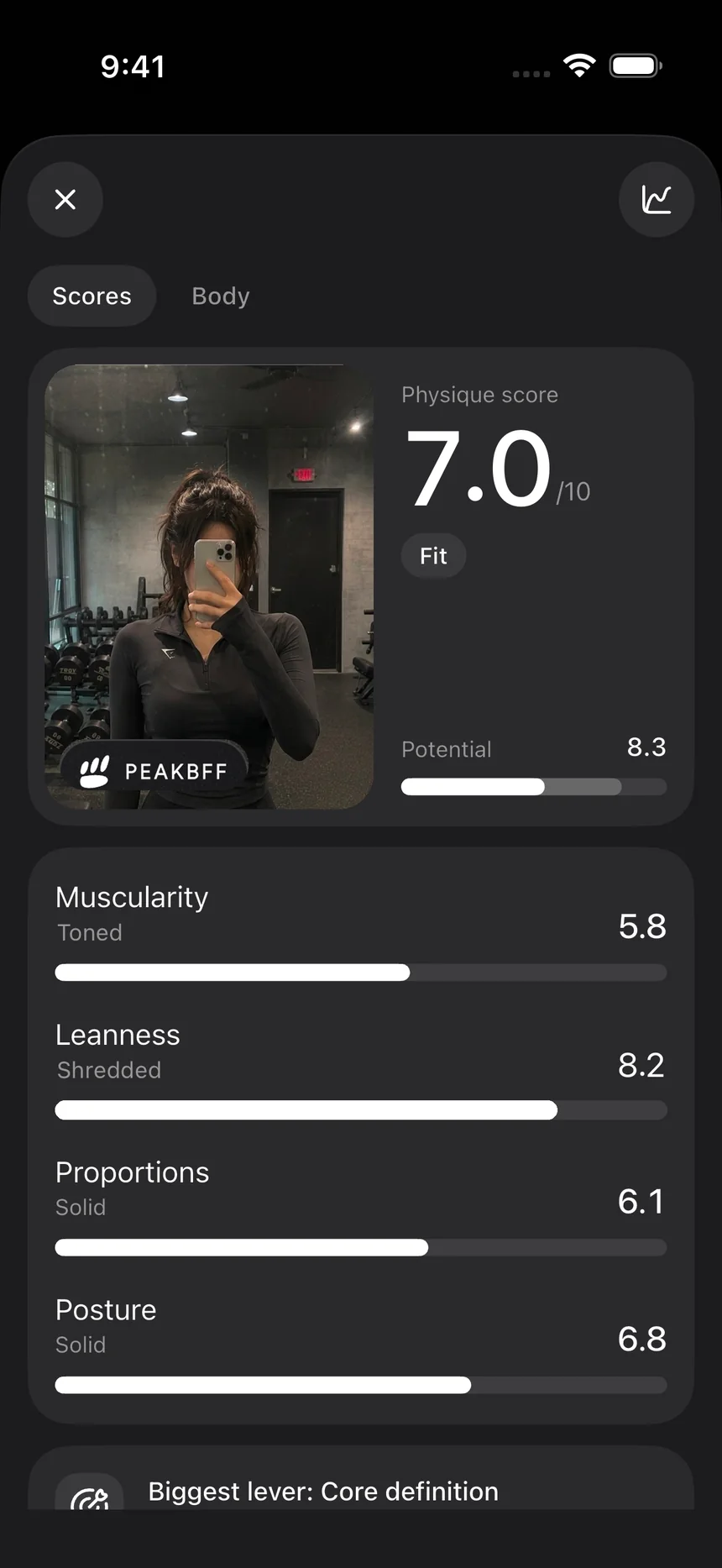
Look at your proportions in the app
PeakBFF's physique rating reads front and back photos and scores proportions along with muscularity, leanness, posture and potential. Weekly check-ins keep your weigh-ins and progress photos together. Scores are for motivation, not diagnosis.


What the ratio is
The shoulder to waist ratio is your shoulder circumference divided by your waist circumference. A result of 1.5 means your shoulders measure one and a half times your waist. Some people prefer the other way round, waist to shoulder, which is the same numbers inverted.
In bodybuilding the target people quote is 1.618, the golden ratio, sometimes called the Adonis index. It is an aesthetic convention about proportion. It is not a health measure and says nothing about how fit, strong or healthy anyone is.
How to measure
Use a soft tape measure and take both measurements in the same session, standing relaxed. A helper makes the shoulder measurement easier.
- Shoulders: wrap the tape around the widest part of your shoulders, over the deltoids, with your arms relaxed at your sides. Keep the tape level all the way round.
- Waist: measure around the narrowest part of your torso, usually just above the navel, after a normal breath out. The tape should be snug but not pressing in.
- Repeat each measurement twice and use the average.
Reading your result
The calculator shows your ratio, how it compares with 1.618 as a percentage, and what waist or shoulder measurement would match 1.618 with your other number. Treat these as reference points, not targets you must hit.
Frame, bone structure and how you carry weight all change the ratio, and calculators measure different things. Some use shoulder width rather than circumference, which gives a different number. Compare results only with the same method over time.
Training the muscles that widen the shoulders and upper back can raise the ratio over months. Waist measurements follow overall body composition.